Look at wire photos from the autumn of 2005 and you can watch an entire subcultural ecosystem collide with corporate HR in real time. On October 17, 2005, NBA Commissioner David Stern announced a league-wide mandatory dress code, which officially took effect with the start of the regular season on November 1, 2005. Overnight, the oversized throwback jerseys, heavy platinum medallions, and wheat-colored nubuck work boots that defined early-2000s tunnel walks were outlawed during team or league business. What followed over the next decade was a masterclass in garment subversion. Players took a rigid institutional mandate designed to sanitize their image and twisted it from the inside out, ultimately transforming the concrete loading dock outside the locker room into the most watched menswear runway on earth.
The Autumn 2005 Mandate and the Policing of Hip-Hop Aesthetics
To understand how the silhouette evolved, we have to start by reading the actual text of Stern’s directive like a pattern cutter examining a spec sheet. The league mandated "business casual" attire whenever players engaged in team or league business. Under the new guidelines, acceptable clothing was strictly narrowed to collared or turtleneck dress shirts, sweaters, dress slacks, khakis, or dress jeans, paired with appropriate dress shoes and socks. If an injured or inactive player was seated on the bench during a game, the rules went a step further and required a sport coat.
The prohibited list read like a targeted inventory of the era's Black hip-hop wardrobe, a style brought into the cultural mainstream by Allen Iverson. The league explicitly banned:
- Sleeveless shirts, T-shirts, and sports jerseys
- Shorts of any kind
- Sports headgear (including fitted baseball caps and durags)
- Chains, pendants, or medallions worn visibly over clothing
- Sunglasses worn indoors
- Headphones outside of the team bus, plane, or locker room
- Sneakers, sandals, flip-flops, and work boots (a category aimed squarely at the Timberland 6-inch boot without naming the trademark in the policy text)
Why did the league suddenly care whether a point guard wore a throwback jersey to a press conference? You have to place the October announcement within the frantic corporate image-repair climate following the November 2004 Pacers-Pistons brawl in Auburn Hills. Anxious to appease suburban broadcast sponsors and corporate suite holders, executives conflated hip-hop subcultural dress with criminality and professional liability. By policing the clothing, the front office sought to neutralize the cultural defiance associated with the garments.
Yet when you examine arrival photography from the 2005–2006 season, you see immediately that banning a garment category does not erase a silhouette. Players traded their jerseys for collared shirts and wool flannel slacks, but they refused to surrender their volume. Extended jacket lengths, broad trouser legs, and deeply stacked hems proved that formal tailoring could easily absorb oversized streetwear proportions.
From Generous Cuts to the Loading Dock Runway (2005–2015)
When we track the visual archive from 2005 to 2015, the real story lies in the shifting anatomy of the cut rather than a simple progression toward pricier luxury labels. The decade falls into three phases of construction and styling.
Phase One: Five-Button Proportions (2005–2008)
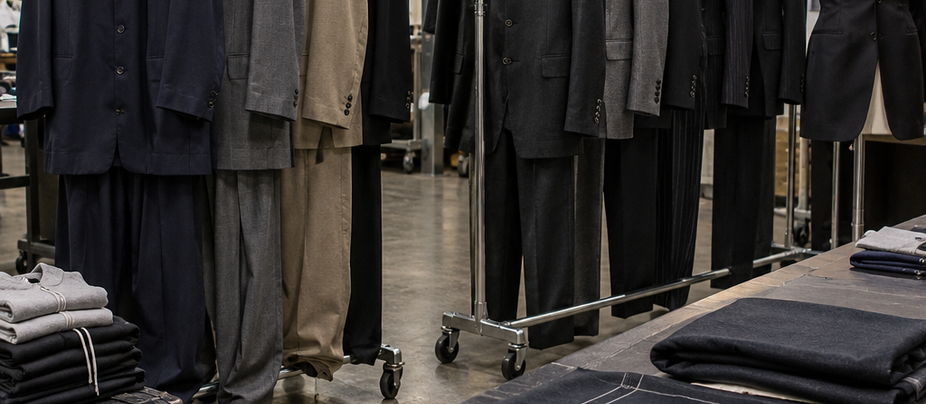
During the initial seasons between 2005 and 2008, players translated their preferred streetwear drape directly into the permitted suiting categories. If you study wire photos from those early post-mandate winters, you can isolate specific construction details: four- and five-button single-breasted jackets cut with dropped, extended shoulders, sleeves falling past the wrist bone, and wide-leg trousers pooling heavily over wide-toed dress shoes. The visual effect remained unmistakably defiant, maintaining the familiar visual weight of a triple-XL tee while checking every box on the commissioner's compliance sheet.
Phase Two: European Showrooms and Pattern Control (2008–2012)
Between 2008 and 2012, the dynamic shifted from defensive compliance to aggressive patronage of high fashion. Contemporary style reporting and interviews from this window document Dwyane Wade, LeBron James, and Amar'e Stoudemire sitting front row at Paris and New York fashion weeks. Instead of treating tailored clothing as a league punishment, athletes began working directly with high-fashion stylists and European design houses to gain structural control over how clothing sat on a six-foot-eight frame.
By the 2012 postseason, the conversation moved beyond conventional suiting altogether. Russell Westbrook arrived at playoff games wearing bold, short-sleeve printed button-downs and thick, lensless optical frames. Those arrivals dominated sports media coverage, proving that subversive accessories and loud patterns could generate massive cultural velocity within the technical boundaries of a collared shirt.
Phase Three: The Arena Tunnel as Runway (2012–2015)
Between 2012 and 2015, the harsh fluorescent corridor connecting the team bus to the locker room completed its evolution into a documented fashion runway. When we compare photographs from this late window against 2006 arrivals, we look closely at four technical markers: collar contact against the neck, shoulder seam placement, sleeve pitch, and trouser balance. The armholes rose significantly, pulling the chest canvas cleanly against the torso, while trouser hems climbed to expose the ankle or sit cleanly atop high-end footwear. A close-fitting photograph alone does not prove a garment was bespoke, as made-to-measure programs and skilled alterations achieved similar sharpness, and contemporary menswear reporting confirms as much. Furthermore, while sleek T-shirts and luxury leather sneakers began reappearing under blazers around 2012, a garment's photographed return only establishes its visibility in the tunnel rather than proving whether the league formally permitted, overlooked, or privately fined the player.
Translating Tunnel Proportions Without an Athlete's Budget
You do not need a custom Parisian pattern block or an athlete's bank account to apply the lessons of the 2005–2015 tunnel era to your own wardrobe. The core mechanic developed by players during this decade was simple: pairing structured, roomy tailoring with heavy knitwear and subcultural footwear. Here is how we build that exact silhouette from the ground up using accessible mid-tier suiting or vintage racks, step by step.
Step 1: Secure the Rise and Seat First
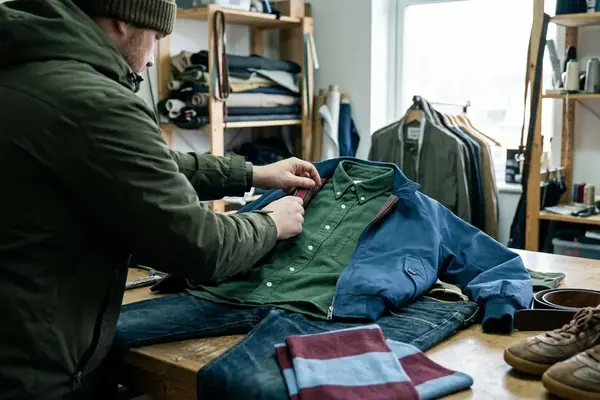
When you are hunting through vintage shops or trying on mid-priced wool flannel trousers, ignore the waist size tag and focus entirely on the top block. Put the trousers on and sit down in a hard chair. Check how the crotch seam and waistband feel under tension. Raising a short rise requires recutting the entire fork of the trouser, which is practically impossible on finished garments. Buy trousers that comfortably accommodate your seat, hips, and thighs right off the hanger; excess width down the leg and an unfinished or long hem give your tailor plenty of raw material to sculpt.
Step 2: Pin the Taper on the Move
Take those generous trousers to a local alterations tailor to dial in the line from the knee to the ankle. Ask the fitter to pin a gentle taper through the lower leg while leaving the upper thigh and seat untouched—this preserves the relaxed movement that makes wide tailoring look intentional rather than sloppy. Do not just stand frozen on the tailor's podium while looking in the three-way mirror. Walk across the shop floor and sit down with the steel pins in place before approving the chalk line, ensuring the wool flannel drapes smoothly without catching on your calves.
Step 3: Calibrate the Jacket and the Hem Break
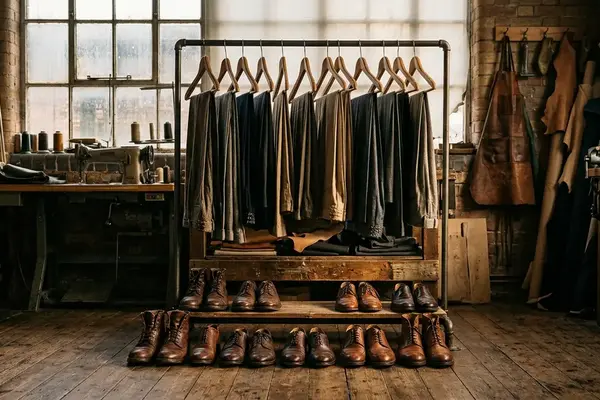
Apply the same top-down logic to your outerwear. Fit your blazer or sport coat strictly through the shoulders and chest first, then let the tailor nip the waist seam slightly to create shape. When you return to set the final trouser hem, bring the exact footwear you plan to wear with the outfit. A no-break hem skims the top of the shoe and clears the vamp completely for a sharp, cropped profile; a slight break rests gently on the laces to create one shallow horizontal fold rather than the heavy, accumulated stacking of 2005.
Step 4: Execute the High-Low Layering Formula
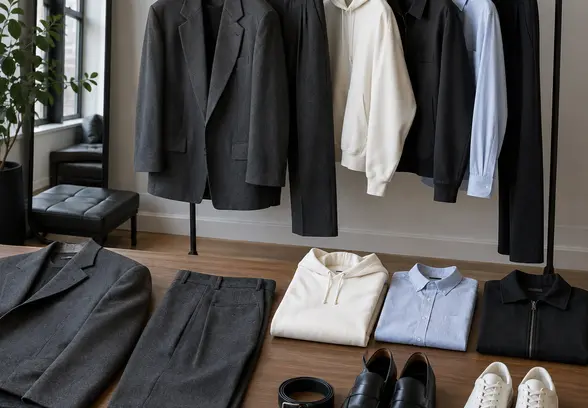
To bring this into an everyday rotation—as a modern adaptation rather than a strict reading of Stern's 2005 rulebook—swap the stiff corporate dress shirt for serious texture. Layer a heavyweight, tight-collar cotton crewneck tee underneath an unstructured wool blazer or a heavy canvas chore coat. Anchor the outfit with understated low-profile leather sneakers or chunky lug-sole leather derbies, which give you the rugged visual grounding of the banned 2005 work boot while keeping the polish of a tailored shoe.
When you step out in a tailored silhouette today, are you dressing to appease an outdated institutional standard, or are you using structure on your own terms to subvert the room?