How Do You Capture a Club Before the Wrecking Ball Arrives?
How do you document the lived reality of an underground music venue when its physical space is slated for demolition and its paper trail is limited to crumpled flyers? You start by treating the room as a working operational system. Independent nightclubs and DIY spaces incubate regional style, slang, and sound, yet they rarely maintain formal institutional archives. When a space closes, relying on promoter nostalgia or social media remnants flattens the night-to-night mechanics of how the building actually functioned.
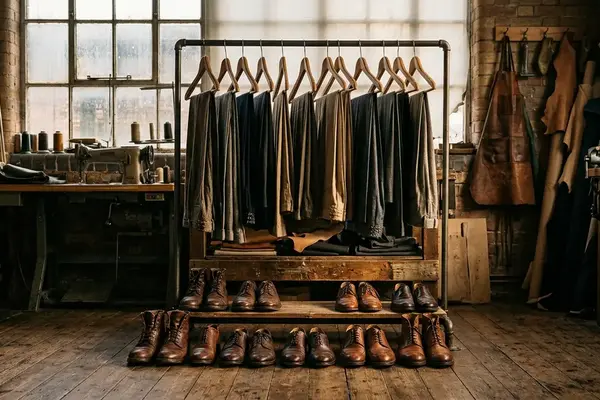
To capture that system, look at who unlocked the doors, controlled admission, moved speaker cabinets, served drinks, and stayed after lights-up to mop the floor. Those routines connect directly to the subcultural styles the room incubated—whether that meant altered sportswear, heavyweight wool flannel workshirts, or customized Mitchell & Ness caps worn by the resident crew. A flyer only tells you what was promoted. It misses the physical friction of the room.
Before recording a single conversation, build a rigorous source register and map the physical space:
- Create a central tracking log with distinct fields for contributor role, dates of attendance or employment, artifact ownership, interview permissions, and the specific historical claim each item supports.
- During the initial walkthrough, mark the public entrance, DJ booth, bar, toilets, storage area, and staff-only routes on a working floor plan so later recollections can be anchored to exact coordinates.
- Separate a flyer’s advertised lineup from spoken testimony about who actually showed up and performed, preserving both statements alongside their respective sources.
Mapping the Room: Promoters, Door Staff, and the Front-Left Speaker Crew
Interviewing only headlining DJs or the booking agent produces a sanitized promotional narrative. A venue's memory is stratified by labor and physical vantage point. To avoid scope creep, define the project strictly around a specific resident night and its opening-to-final-party period before recruiting interviewees, assigning earlier building history to a separate background file.
Once the temporal boundaries are locked into the interview brief, build your contact map by job function and position in the room rather than billing order. Door staff remember admission decisions, queue dynamics, and neighborhood friction; for their interviews, distinguish an advertised dress code from an instruction given at a pre-shift briefing and from discretionary calls made on the pavement. Sound engineers remember signal paths, booth-monitor positions, playback equipment, limiter behavior, and the exact spot on the dancefloor where bass response or vocal intelligibility dropped off. Barbacks remember ice replenishment routes, crowd bottlenecks, and the state of the floor at 5:00 AM.
How do you track down the early regulars who witnessed the transition of a crowd's uniform and music taste before a night became commercialized? Ask staff who stood in the same spot every week. Record each regular's usual arrival time and habitual position in the room. The front-left speaker crew—perhaps trading underground tapes or wearing imported FC St. Pauli hoodies before the look crossed over—and the crowd arriving solely for the final headlining set experienced completely different versions of the same night.
Field Recording Protocols, Question Design, and Release Forms
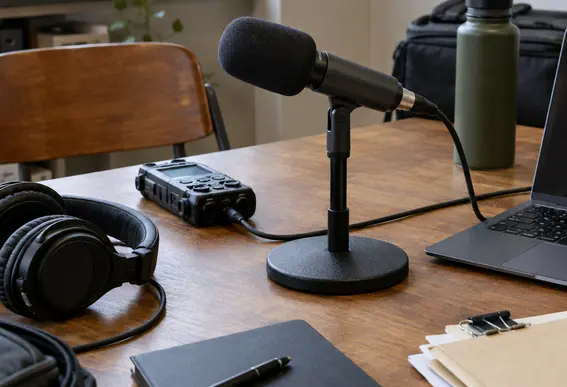
Concrete basements and empty barrooms ruin uncalibrated audio. Choose a quiet, furnished interview location first, then deploy a close-positioned dynamic cardioid microphone to prioritize the speaker's voice over the room's natural resonance. Controlled distance and orientation matter far more than a blanket assumption that condenser microphones are unsuitable. Set a starting microphone distance of 10–15 cm with a pop filter, make a test recording, and listen back through closed-back headphones. Move away from humming beverage coolers, ventilation ducts, or reflective corners before capturing the master file at 24-bit/48 kHz WAV while monitoring continuously for clipping.
Broad prompts like "What was the vibe?" yield rehearsed clichés. Structure the interview script around physical triggers—flyers, bar tabs, floor plans, and clothing—to prompt sensory recall. Ask artifact-led questions: "Where did you put this stamped wristband on?", "What did this bar tab cover?", and "Was this jacket bought locally, altered, or borrowed?" When documenting streetwear, photograph garment tags right alongside the full piece; apparel labels alone rarely prove when a piece was worn.
Basement Consent Protocol
Underground venues often operate in legal gray areas. Agree on a non-verbal pause signal before discussing sensitive subjects, stop recording immediately when requested, and document any agreed redaction in a restricted project log.
Ethical frameworks aligned with Oral History Association principles and best practices require explicit informed consent. Your release form must identify the recording, permitted uses, attribution or pseudonym preference, restrictions, any review deadline, and the specific copyright or participation rights being licensed or transferred. Keep the archive's cultural authority distinct from legal authority: community testimony does not substitute for municipal building records or determine property ownership, and a deed of gift establishes only the rights and uses specified in its terms—never immunity, confidentiality against legal process, or assurance that a limitation period has expired. Encourage contributors to omit self-incriminating details and seek qualified local legal advice before recording potentially incriminating accounts, as archivists should never calculate a subject's legal exposure.
Triangulating Conflicting Memories and Packaging the Archive
Three different promoters sit across from you in the same week, and each one claims to have booked the same legendary debut set. Nightlife mythology thrives on blurred credit. Rather than picking a winner, unpack the legendary debut booking into first contact, fee negotiation, travel arrangements, lineup announcement, and final payment before assigning credit. Ask each claimant which specific action they performed and what surviving paper or digital material supports it. Apply the exact same decomposition to a disputed style trend by separating who wore a look first, who sold it, who photographed it, and who enforced it as a door standard.
Cross-referencing spoken testimony against external ephemera requires strict metadata discipline:
- For every disputed claim, log the interview timestamp, supporting artifact identifier, conflicting source, and an editorial finding marked as corroborated, disputed, or unverified.
- Record whether a photograph's date derives from original camera file metadata, a physical print annotation, or a later social media upload, and log the provenance of a stamped wristband separately from the date a contributor associates with it.
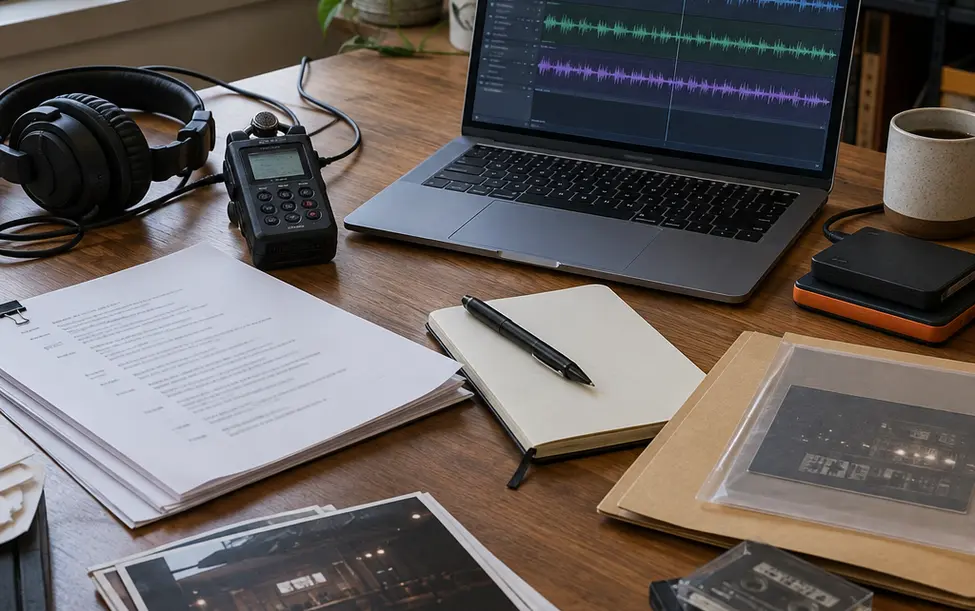
- Use standardized filenames such as VENUE_NIGHT_INT03_YYYY-MM-DD_MASTER.wav and VENUE_NIGHT_INT03_YYYY-MM-DD_TRANSCRIPT.txt, keeping the interview identifier stable across audio, transcript, release, and artifact references.
- Preserve the original unedited recording and any edited access copy as separate files, saving transcripts as UTF-8 plain text with clear speaker identifiers and timestamps at every topic change.
- Generate checksums for all preservation files, retain a manifest to detect later copying errors, and store signed releases separately from public downloads.
Blueprint: The 48-Hour Closing Weekend Documentation Sprint
When a venue announces an abrupt shutdown, you do not have months to plan. Treat the following timeline as a proposed emergency workflow designed around what disappears first: access to the intact room, access to exhausted staff, and finally loose physical artifacts. Assign one person strictly to audio recording and a second person to permissions, source identifiers, and the ingest log, keeping preservation masters and public-access materials separate from the start.
- Hours 1–12 (Friday Afternoon): Conduct a fully lit, empty-room walkthrough with the head sound technician and door manager before final weekend load-in. Record a narrated spatial tour, identifying each stop aloud and marking it on your working floor plan: public entrance, DJ booth, monitor position, main bar, and green room. Capture a clean track of room ambience separately from spoken testimony. Remember that the booth walkthrough preserves where the monitor stood; it does not establish who owned the building or protect a recorded admission.
- Hours 13–36 (Saturday Afternoon): Schedule four 45-minute sit-down interviews with a promoter, a veteran bartender, a resident DJ, and a ten-year regular. Set up in the quietest available back office, hanging heavy blankets or positioning soft furnishings to dampen wall reflections. Buffer 15 minutes between sessions for consent checks, file transfers, and equipment resets. Obtain the signed one-page release before starting the substantive recording, then run every interviewee through the same three-part question sheet: reconstruct one complete arrival-to-close sequence, explain one physical artifact or garment, and identify a specific shift in sound, crowd, or dress.
- Hours 37–48 (Sunday After Closing): In this workflow, the team brings a flatbed scanner onsite and digitizes five priority artifacts before the walls are stripped. Both sides of any item carrying back-printed information are scanned, with lossless image masters retained and PDF access copies generated. Each artifact identifier links directly to the relevant Saturday interview timestamps. Before the team leaves the building, the copied files open cleanly and match their generated checksums. The WAV masters, image masters, UTF-8 transcripts, PDF access copies, and rights manifest sit on a disconnected local drive, with an independently stored backup deposited with a community repository. Only the files explicitly cleared for public access appear in the public archive.