The Argument for Matchday Friction
The biography of a football shirt begins the moment it leaves the hanger and enters the stadium environment. Body heat, rain, and repeated movement alter the heavy polyester over time. These garments were engineered specifically for active use on the terraces. The relevant contact points take the load during every match. Sweat, bag straps, stadium seats, and raised arms repeatedly stress the fabric at the collar edge, underarms, lower back, and side seams. This friction creates a unique record of the garment's life.
Continued wear preserves the function and terrace context of the shirt. We keep the subcultural lineage alive through active use. The routine following a match requires specific attention. Air the shirt inside out for 12 to 24 hours before returning it to a wardrobe. Trapping residual moisture encourages odour. It also transfers grime to adjacent garments. Proper airing allows the synthetic fibres to release trapped moisture naturally.
Managing Post-Match Moisture
Air the shirt inside out for 12 to 24 hours before returning it to a wardrobe. Trapping residual moisture encourages odour and transfers grime to adjacent garments.
The physical reality of wearing a football shirt shapes its biography. Body heat, rain, and repeated movement alter the heavy polyester over time. These garments were engineered specifically for active use on the terraces. The relevant contact points take the load during every match. Sweat, bag straps, stadium seats, and raised arms repeatedly stress the fabric at the collar edge, underarms, lower back, and side seams. This friction creates a unique record of the garment's life.
Continued wear preserves the function and terrace context of the shirt. We keep the subcultural lineage alive through active use. The routine following a match requires specific attention. Air the shirt inside out for 12 to 24 hours before returning it to a wardrobe. Trapping residual moisture encourages odour. It also transfers grime to adjacent garments. Proper airing allows the synthetic fibres to release trapped moisture naturally.
When Terrace Uniforms Become Sterile Assets
Look at a typical resale listing. The grading concentrates heavily on tags, pulls, bobbling, print cracking, colour fade, and collar shape. These categories dominate the market vocabulary. They say very little about who wore the shirt or where it travelled. A retained shop tag documents unsold stock. A softened collar, a period repair, or a sponsor print weathered through use supplies the matchday associations. Long-term display creates its own specific damage. Daylight fades exposed panels. Tight mounting strains shoulder seams over time — physical inspections of framed collections reveal as much. Direct contact with acrylic traps dust or condensation against the textile. Removing these garments from matchday life strips away the meaning that created their initial value.
Avoiding Acrylic Condensation
Direct contact with acrylic frames traps dust or condensation against the textile, accelerating degradation.
Look at a typical resale listing. The grading concentrates heavily on tags, pulls, bobbling, print cracking, colour fade, and collar shape. These categories dominate the market vocabulary. They say very little about who wore the shirt or where it travelled. A retained shop tag documents unsold stock. A softened collar, a period repair, or a sponsor print weathered through use supplies the matchday associations. Long-term display creates its own specific damage. Daylight fades exposed panels. Tight mounting strains shoulder seams over time. Direct contact with acrylic traps dust or condensation against the textile. Removing these garments from matchday life strips away the meaning that created their initial value.
Evaluating Seams and Flock for the Terraces
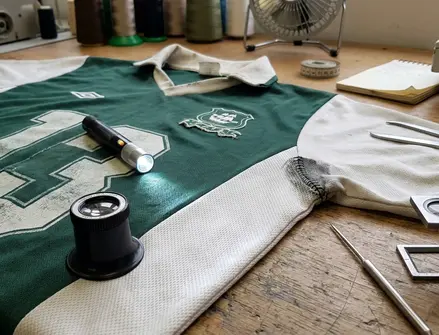
Assessing a vintage shirt requires a systematic check from the load-bearing structure outward. Hold the body fabric against a strong lamp to find thinning. Flex the collar and cuffs. Roll each seam between finger and thumb. Bend printed or flocked areas without stretching them. Bobbling alone remains largely cosmetic. Scattered pinholes, powdering foam, or seams that open under light tension indicate a shirt requiring intervention. Inspect the underarms, shoulder joins, and hem over a five to ten minute check. These zones reveal popped stitches, hardened thread, and abrasion more reliably than the centre of the torso. Heavy flock sponsors should remain flexible when the shirt is gently folded. Cracking that widens, loose corners, or a chalky residue signal adhesive or foam breakdown. Single-stitched hems deserve inspection at every thread end. A repairer can anchor an actively unravelling section from the reverse with closely matched thread rather than stitching across intact original work. A verified match-worn artifact from the 1950s belongs under textile-conservation handling, whereas an ordinary mass-produced replica from the 1990s can usually return to matchday use after passing the fabric, seam, and print checks.
Based on the lamp–collar–seam–flock breakdown for deciding whether a 1990s terrace replica can survive another away end, our evaluation criteria focus on structural longevity.
Assessing a vintage shirt requires a systematic check from the load-bearing structure outward. Hold the body fabric against a strong lamp to find thinning. Flex the collar and cuffs. Roll each seam between finger and thumb. Bend printed or flocked areas without stretching them. Bobbling alone remains largely cosmetic. Scattered pinholes, powdering foam, or seams that open under light tension indicate a shirt requiring intervention. Inspect the underarms, shoulder joins, and hem over a five to ten minute check. These zones reveal popped stitches, hardened thread, and abrasion more reliably than the centre of the torso. Heavy flock sponsors should remain flexible when the shirt is gently folded. Cracking that widens, loose corners, or a chalky residue signal adhesive or foam breakdown. Single-stitched hems deserve inspection at every thread end. A repairer can anchor an actively unravelling section from the reverse with closely matched thread rather than stitching across intact original work.
Cold Water and Blunt Needles
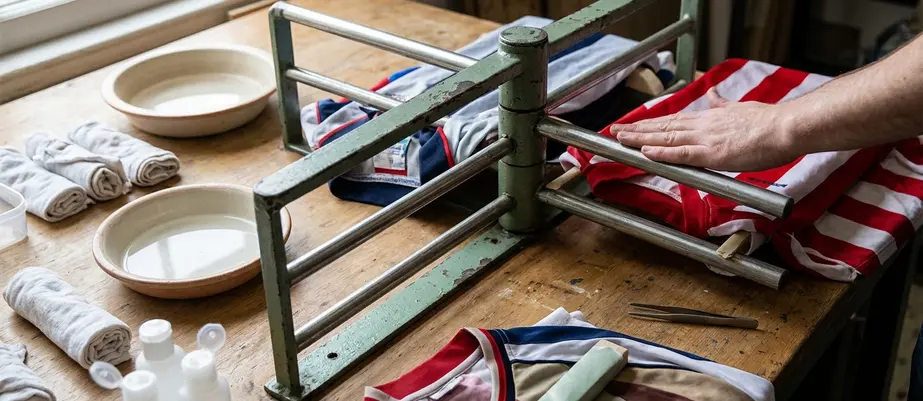
Set the maintenance order around the most vulnerable component—the sponsor application. Close fastenings and turn the shirt inside out. Isolate it from dark or bleeding garments. Hand-wash in water at 20°C or below for five to ten minutes with a small dose of mild liquid detergent. Do not scrub, wring, or leave the shirt soaking. Rinse in fresh cold water until the detergent clears. Press the shirt between clean towels to remove excess water. Reshape it and dry it flat for 12 to 24 hours away from direct sun, radiators, and tumble-dryer heat. Avoid fabric softener and chlorine bleach entirely. Softener leaves a coating on synthetic fibres. Both products interfere with ageing prints, adhesives, and colour. For a minor pull, use a blunt needle or snag-repair tool to draw the loop to the reverse. Never cut the loop. Secure a genuinely loose seam thread from the inside with two or three small stitches in a matching thread. Complete this thread repair only after the fabric has dried. Avoid sewing through a sponsor graphic. For further guidance, consult the Smithsonian guidelines for historic textile preservation.
Securing Loose Seam Threads
Secure a genuinely loose seam thread from the inside with two or three small stitches in a matching thread, completing this repair only after the fabric has dried.
Set the maintenance order around the most vulnerable component. Close fastenings and turn the shirt inside out. Isolate it from dark or bleeding garments. Hand-wash in water at 20°C or below for five to ten minutes with a small dose of mild liquid detergent. Do not scrub, wring, or leave the shirt soaking. Rinse in fresh cold water until the detergent clears. Press the shirt between clean towels to remove excess water. Reshape it and dry it flat for 12 to 24 hours away from direct sun, radiators, and tumble-dryer heat. Avoid fabric softener and chlorine bleach entirely. Softener leaves a coating on synthetic fibres. Both products interfere with ageing prints, adhesives, and colour. For a minor pull, use a blunt needle or snag-repair tool to draw the loop to the reverse. Never cut the loop. Secure a genuinely loose seam thread from the inside with two or three small stitches in a matching thread. Complete this thread repair only after the fabric has dried. Avoid sewing through a sponsor graphic.
Surviving the Rusted Turnstile
A supporter navigates a rusted turnstile in steady rain. The faded 1992 away kit, made from comparatively heavy polyester, takes the weather. Rain darkens the cloth. The moisture exposes the difference between the softened fabric and the rigid sponsor print. The damp shirt clings at the shoulders and billows at the waist. The cloth survives the crush of the concourse, the raised arms during a corner kick, and the wet journey home. After the match, the practical sequence is immediate. Remove the wet shirt from a closed bag. Air it inside out. Cold-wash it before sweat and turnstile grime dry into the collar and cuffs.
A supporter navigates a rusted turnstile in steady rain. The faded 1992 away kit, made from comparatively heavy polyester, takes the weather. Rain darkens the cloth. The moisture exposes the difference between the softened fabric and the rigid sponsor print. The damp shirt clings at the shoulders and billows at the waist. The cloth survives the crush of the concourse, the raised arms during a corner kick, and the wet journey home. After the match, the practical sequence is immediate. Remove the wet shirt from a closed bag. Air it inside out. Cold-wash it before sweat and turnstile grime dry into the collar and cuffs.