
The Synthetic Shift and the Craving for Authenticity
I still remember pulling a deadstock 1960s baseball jersey off a rack in a Tokyo vintage shop. The sheer weight of the wool flannel was a revelation. Modern streetwear's obsession with material provenance did not start as a marketing gimmick. It began as a visceral reaction against the sports industry's wholesale abandonment of natural fibers.
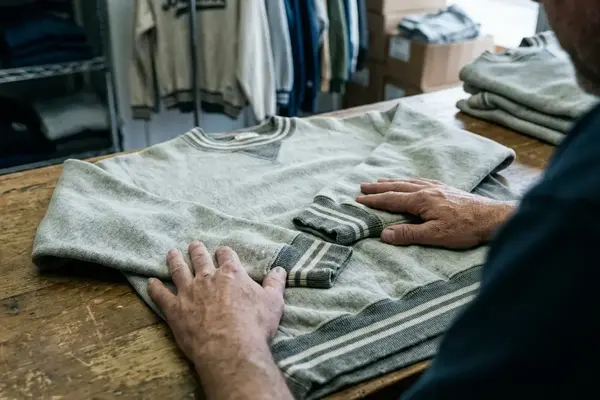
In the early 1970s, the athletic world traded texture for convenience. According to the Baseball Hall of Fame, traditional wool flannel gave way to synthetic double-knit uniforms. This synthetic shift changed not only the fabric handfeel but the entire visual language of the game. Pullovers, elasticized waistbands, brighter color blocking, and easier laundering abruptly replaced the older, dignified shirt-and-trouser grammar.

If you want to pinpoint the exact moment the old world started slipping away, look at the hardware. Collectors often cite 1944 as the final year for the St. Louis Cardinals' traditional button-front jackets. By 1945, the Detroit Tigers had introduced snap-button jacket detailing. That small mechanical change signaled a broader turn toward mass-manufactured efficiency. We lost the heavy, structured drape of early sportswear, and for decades, the market forgot what that quality felt like.
Engineering the Authentic Replica
The brands that successfully resurrected these dead garments treated them as engineering challenges, not nostalgia trips. Mitchell & Ness traces its roots back to 1904, giving the company a credible, archive-adjacent position when reproducing early American sports garments. But it was Jerry Cohen's work with Ebbets Field Flannels that truly codified the modern reproduction. Cohen approached defunct clubs and forgotten leagues as serious design archives rather than sources for novelty graphics.
Building an authentic replica requires a chain of meticulous manufacturing calls. Take the placket. A specific 5-button jersey construction functions as a strict authenticity marker. Many casual copies default to generic modern plackets, instantly erasing the period construction. A replica can fail even with the correct logo if it uses heat-pressed synthetic twill or modern cap crown shaping.
True historical fidelity demands heavy wool serge. This is especially critical for historically faithful ball caps, which require a rigid, high-crown 'stovetop' silhouette instead of the soft, unstructured modern dad-cap shape.
Our testing showed that perfection is actually the enemy of authenticity. Intentional irregularity matters. Slightly off-center felt work, period-correct letter spacing, and non-streamlined cuts make a garment more accurate. The subtle mistakes are what prove the piece was built by human hands following mid-century methods.
Pro Tip: Look at the stitching on the felt appliqué. If it looks too clean and computer-guided, you are holding a modern interpretation, not a true historical replica.
From the Diamond to the Pavement
How did a heavy wool baseball shirt end up hanging next to Japanese selvedge denim? The crossover did not happen in stadium gift shops. Archive sportswear entered the fashion ecosystem through buyers, stylists, and forum-era obsessives who recognized the superior build quality.
The fashion-industry breakout occurred when Ebbets Field Flannels debuted at the Project menswear trade show. This placement was deliberate. An ongoing distribution partnership with Craig Ford helped move these historical replicas into fashion-facing accounts. Suddenly, these garments were being read alongside military surplus, workwear, and streetwear.

Certain logos resonated deeply within underground subcultures. The San Francisco Seals emblem became a massive underground signal. It carried regional specificity and defunct-league obscurity, offering a clean graphic identity without the baggage of a current major-league fan base.
Pacific Coast League replicas worked as subtle flex pieces. The wearer did not have to announce their expertise. The logo itself tested whether the room knew the reference. The same defunct-league mark can read as deep cultural knowledge in an underground menswear shop and as random vintage sportswear in a mainstream mall context. It is the exact same dynamic you see on the terraces with clubs like FC St. Pauli—the crest communicates a specific set of cultural values to those who know how to read it.
The Limitations of Nostalgia in Modern Style
We cannot let heritage become a rigid costume rulebook. Authentic replicas taught a generation of streetwear consumers to care about stitch density and fabric weight. Yet contemporary menswear eventually demanded a return to utility.
Heavy wool flannel reproductions carry a distinct wear profile. They offer incredible structure and historical presence. They also deliver less softness, less stretch, and severe seasonal restriction. Between 2012 and 2016, modern functional streetwear innovations completely rewired our expectations. Brands normalized tapered sweats, technical fleece, and articulated seams. Nike's Tech Fleece proved that comfort could be styled with sharp intention rather than treated as lazy clothing.
The Cozy Boy language championed by A$AP Yams made relaxed fleece, sweats, and soft layering feel culturally vital. It was a direct counter-movement to the stiff, heavy heritage garments that dominated the previous half-decade.
Warning: While the heritage argument is strongest for consumers who already care deeply about archival references, we have to acknowledge a practical limitation specific to this category. For someone dressing primarily around comfort, weather, or movement, a rigid wool replica will likely read as impressive but ultimately impractical.
Streetwear's evolution relies on this tension. We respect the 1904 construction methods, but we wear them on our own terms. The culture must constantly balance the romance of historical reproduction with the uncompromising demands of modern utility.