
The European Away Days
British supporters returning from continental trips noticed something crucial. Expensive Italian tennis tops, track jackets, and trainers offered a distinct advantage. Adopting premium European sportswear functioned as a tactical move to bypass police profiling at train stations and turnstiles. Authorities looked for scarves and replica shirts. They did not look for high-end alpine gear.
The formative period runs from the late 1970s through the mid-1980s, when increased European travel exposed UK supporters to premium tennis and ski-derived sportswear that was uncommon in British shops. The original movement thrived on one-upmanship and subtle wealth signaling. Recognition depended on small details. A chest script, an unusual zipper pull, or contrast piping did the heavy lifting. An entire group did not need to wear matching pieces for the signal to register.
The Commodification of Subculture
The internet-facing revival became especially visible in the early 2020s, with oversized replica shirts frequently styled over jeans or shorts as a self-contained look. This flattens a nuanced subculture into a two-dimensional internet aesthetic. Judge each outfit by whether it could plausibly exist away from a themed photograph. Stacking every searchable signifier creates a costume. A rare vintage track jacket reads as a costume when combined with a replica shirt, a bucket hat, and conspicuous terrace trainers.
Restraint serves as the primary differentiator between style and cosplay. A practical ceiling is one overtly club-specific item per outfit. Additional references can come through fabric, color, or silhouette without repeating crests and sponsor graphics. A vintage Mitchell & Ness cap might hold value in a different context, but forcing American sports heritage into a European terrace silhouette dilutes the visual language.
Outerwear as the Anchor
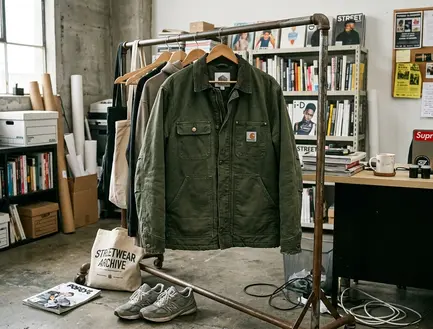
Choose the jacket first because its length, collar, and fabric determine the outline seen from across a concourse. Technical outerwear anchors the silhouette. Inspect the shell under movement. Garment-dyed nylon should crease and change tone naturally, catching the light without looking like a safety reflector.
Massimo Osti's most influential fabric experiments developed across the 1980s and early 1990s, including garment dyeing, coated textiles, modular pockets, and military-derived constructions. Technical outerwear does not need to appear futuristic; garment dye, faded nylon, and restrained pocket placement integrate naturally with traditional menswear. Mix technical jackets with heavy knits or tailored wool flannel trousers to break up the sportswear look. The contrast between a crisp synthetic shell and a textured natural fiber grounds the outfit.
For layering, test the jacket over a medium-gauge crewneck while seated and with both arms raised. Pulling across the upper back or a hem that climbs above the waistband indicates insufficient volume.
Footwear Nuance Beyond the Obvious
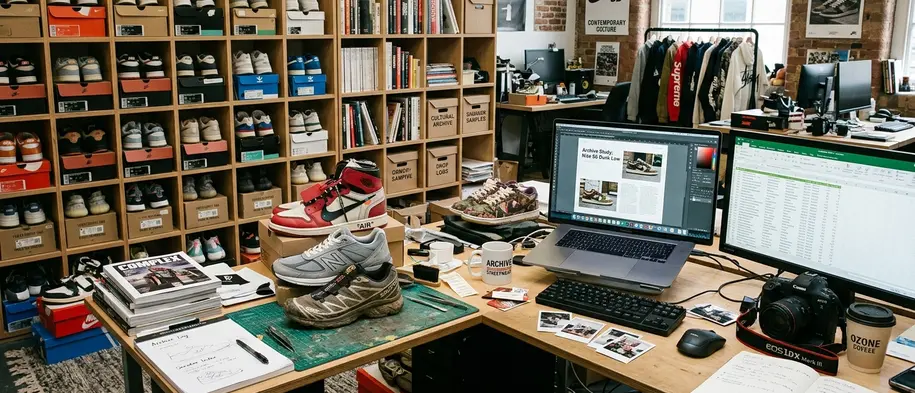
Select trousers and trainers as a pair rather than treating footwear as the final purchase. Low-profile suede trainers became established terrace currency during the late 1970s and 1980s because continental colorways and regional models rewarded travellers who could locate uncommon pairs. Look at archival runners or lesser-known indoor models.
Start with a low-profile suede court or indoor shoe, pin the trouser hem while wearing it, and inspect the line. The ideal trouser break changes with shoe volume. Handling vintage pieces across several seasons with collectors confirms as much. A narrow indoor trainer is easily swallowed by a full break, while a broader archival runner can support more fabric.
For a controlled break, let a straight trouser touch the top of the shoe with roughly a centimetre or two of excess length. Wider trousers tolerate a fuller fold, while tapered hems usually look cleaner with no break. How does the break of the trouser dictate the success of the entire outfit? It anchors the drape.
Color Control and Proportion
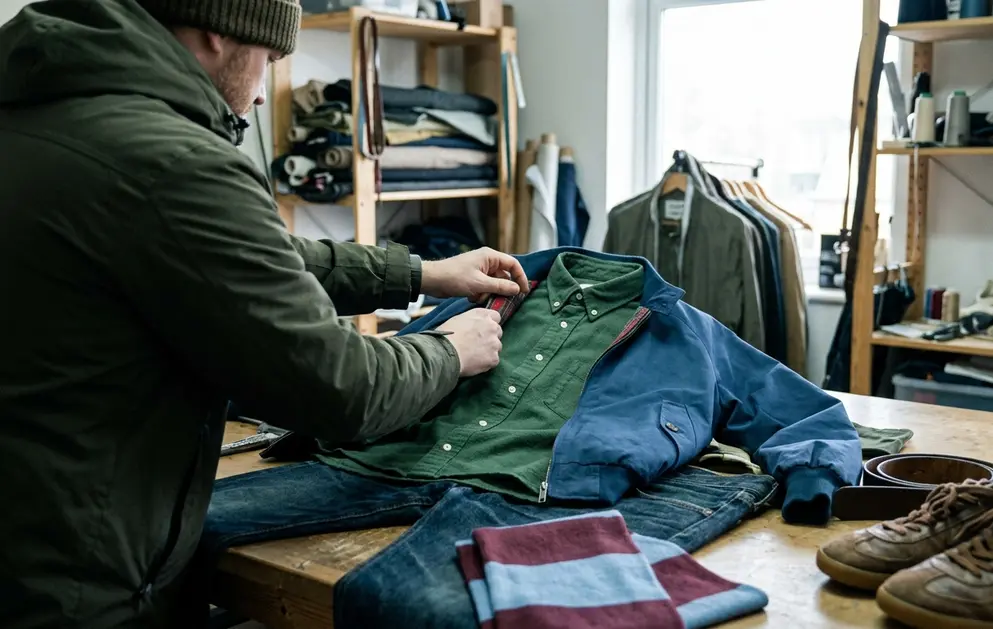
Extract one color from the club reference, whether that is a local side or FC St. Pauli: German football club, rather than reproducing the full home strip. A red-and-blue scarf sits deliberately against an olive shell, charcoal knit, and brown suede trainers—a combination that signals allegiance without shouting it.
Keep the main jacket and trousers within two subdued color families, such as navy with grey or olive with brown. Allow the scarf, cap, or sock to carry the brighter club color. For scarves, one loose wrap with the ends tucked into the jacket reduces the souvenir-stall effect. Leaving both ends fully displayed makes lettering and crests dominate the torso.
While archival pieces hold cultural weight, older sportswear often has short bodies, tight elasticated hems, or degraded coatings; a modern reissue is the better choice when it preserves the intended proportion and can withstand regular wear.
Pre-Match Cosplay Check
- Limit the outfit to one overt club or football graphic.
- Anchor bright scarf colors with muted outerwear and trousers.
- Test the jacket over the knit actually intended for wear.
- Set the trouser hem while wearing the chosen trainers.
Silhouette Over Brand Bingo
Run the final edit from silhouette to branding. Check the jacket-to-trouser proportion, the trouser break, and the balance of matte versus shiny surfaces before considering whether the outfit contains a specific logo. Perform three checks in natural light: zip the jacket, sit down to test trouser rise and break, then cover visible logos with a hand or folded scarf to see whether the outfit still has structure.
Prioritize a jacket ending near the upper hip with a straight or gently relaxed trouser. Pairing a long oversized shell with extremely narrow trousers often produces a top-heavy, revival-era silhouette—a shape best left in the past.
If you are going to pull from this subculture, prioritize the drape of your trousers and the cut of your jacket over flashing a specific badge. True terrace style relies on quiet arrogance and looking better than the opposition. Cultivate personal taste. Leave the checklist at home.