The 30-Day Analog Listening Experiment
I committed to a month-long listening experiment to understand the mechanical differences between predictive modeling and human curation. For days 1–30, I excluded algorithmic playlists and automated next-track suggestions from my discovery process entirely. I kept a daily log of staff recommendations and the specific reasons given for each pick. Predictive modeling relies on listening signals to infer the next track, building a digital echo chamber designed to keep you on the platform. Engagement-driven rankings favor user retention over musical discovery.
A playlist infers your preferences from completion rates, skip data, and collaborative filtering. It feeds you a slightly altered version of what you already know. The system identifies patterns in your listening habits and matches them against millions of other users. It then serves up tracks that people with similar profiles have tolerated without skipping. This creates a frictionless listening experience. It also creates a stagnant one. The algorithm prioritizes comfort over challenge.
Human curation relies on scene history, personal judgment, and a deliberately awkward connection between genres. A clerk can use their knowledge of a specific subculture to push you somewhere entirely new. The person behind the counter wants you paying attention. They understand that a challenging listen often becomes a rewarding one. They recognize the value of a jarring transition.
During the first week of the experiment, the absence of the algorithm felt jarring. I had grown accustomed to the passive consumption of music. The automated next-track feature had become a crutch. Removing it forced me to actively seek out new sounds. It required me to engage with the music on a deeper level. The engagement-driven rankings keep returning to familiar territory. A clerk can push you somewhere new. The physical act of seeking out a recommendation changes your relationship with the music.
The Weight of Inventory and Deliberate Friction
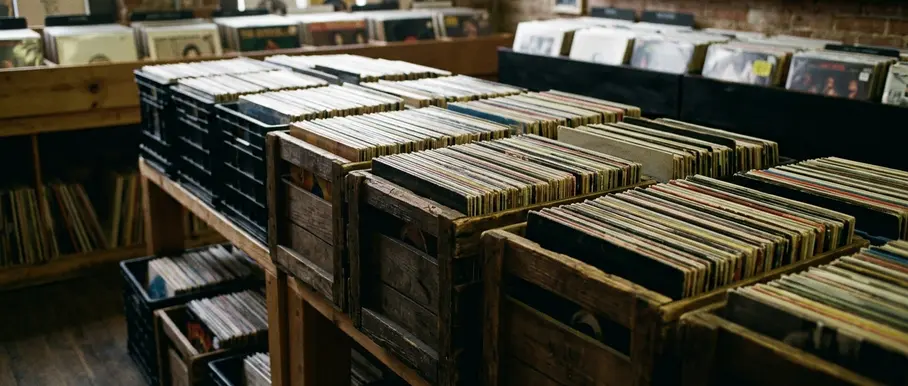
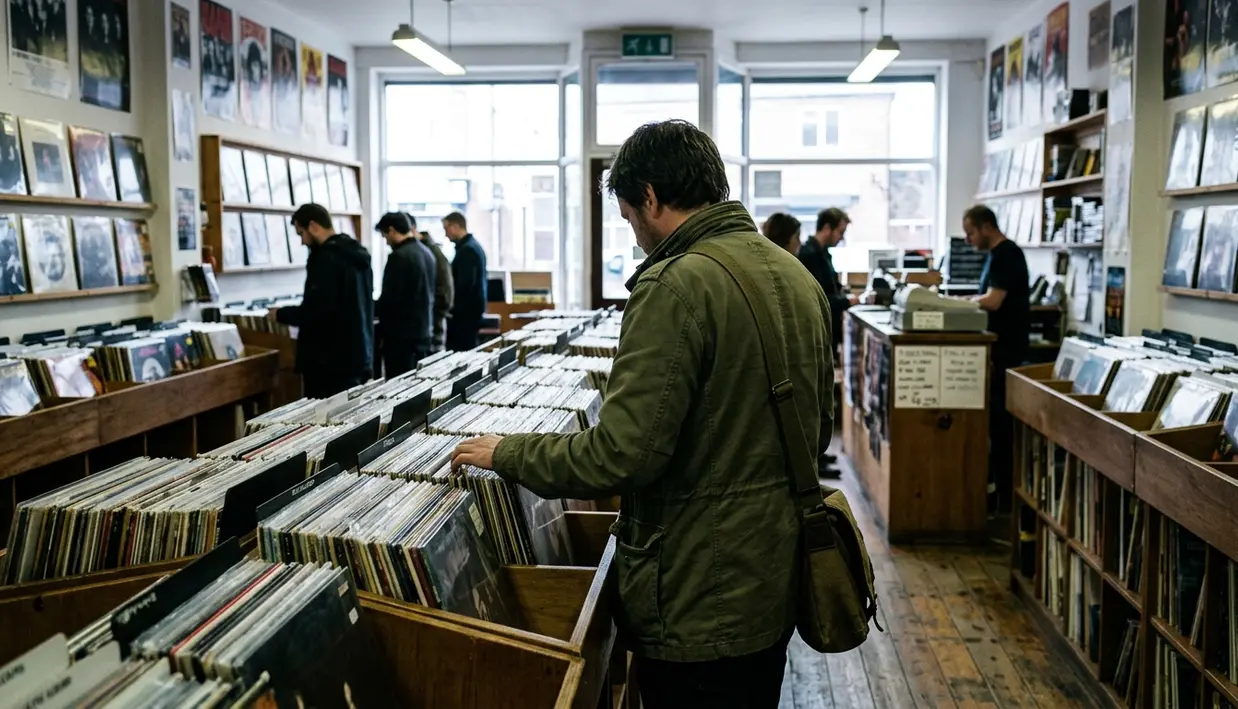
Compare the moment a stream starts with the physical work behind a shop recommendation. You travel to the store. You search the crates. You ask why a specific sleeve sits in the staff-picks bin. Shelf space, purchasing budgets, and shipping costs make every stocked title a calculated decision. A streaming platform has infinite storage, requiring zero editorial judgment to host a track. An independent shop operates within strict physical and financial boundaries.
That constraint does not guarantee a better record, but it makes the shop's selection visible. Every piece of vinyl on the floor represents a financial risk taken by the owner. This forces them to curate with extreme prejudice, elevating the baseline quality of the available music. It mirrors the difference between buying a mass-produced synthetic jacket and hunting down an archival Mitchell & Ness piece or a vintage heavy wool flannel. The latter requires effort, but the construction and history justify the search. The tactile nature of the search adds value to the discovery.
On each visit, I examined the new-arrivals bin and the section the clerk pointed to before buying. I recorded the explanation for the least obvious pick. I specifically asked the clerk for one choice that seemed wrong on paper and had them explain it. The value of the 'wrong' recommendation often leads to unexpected genre pivots — a risk a purely mathematical algorithm avoids entirely. It will never suggest a jarring transition because a jarring transition might cause you to close the app.
The friction of physical discovery actively enhances the listening experience. The time spent flipping through crates builds anticipation. The conversation with the clerk provides context. The physical act of placing the needle on the record demands your attention. You are investing time and money into the music. This investment changes how you perceive the sound. You listen with intent.
White Labels and Neighborhood Archives
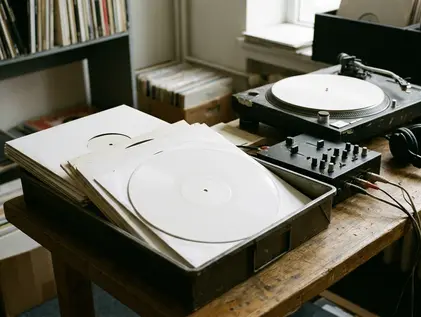
Follow the provenance of a recommendation rather than treating a genre tag as its whole identity. Record store clerks serve as living archives of local subcultures and underground movements. These movements frequently lack the clean metadata required to surface on global streaming platforms. A clerk knows who stocked a local cassette. They know which small label handled a pressing. They understand why two neighborhood sounds overlap.
I asked to see consignment stock, white-label sleeves, and self-released tapes. I checked whether those particular releases had a digital listing instead of assuming they did not. The counter-to-catalog boundary is a lead to investigate. A white label or self-released cassette is a starting point, not proof that the music is absent from streaming. I wrote down the label or artist credit, format, and any location printed on the sleeve or insert. I brought those details back on the next visit.
This local-scene advantage depends on the shop carrying regional releases and having staff who know their provenance. When those elements align, the shop becomes a cultural hub. Compare the homogenized, borderless nature of algorithmic playlists with this hyper-local knowledge. It feels akin to understanding the terrace culture of FC St. Pauli: German football club, where the music, the politics, and the local identity are completely intertwined. You cannot algorithmically generate that context. It requires a physical space and a human historian.
The algorithm categorizes music by tempo, key, and genre tags. The clerk categorizes music by geography, history, and social connections. They know that a specific post-punk band shares a rehearsal space with a local techno producer. They understand how the industrial history of a city influences its electronic music scene. This contextual knowledge is invaluable. It allows the clerk to make connections that a machine would never see. They map the cultural geography of the city through sound.
Executing the Five-Sleeve Bridge Walkthrough
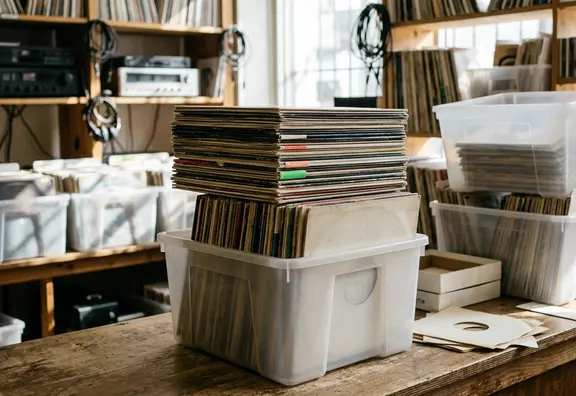
The five-sleeve bridge provides a concrete framework for approaching record store staff. Two known records become a clerk's five unfamiliar picks, with one intentionally difficult connection that earns its place through an explanation. At the first visit, I named two reference points and bought a stack of five unfamiliar records. Across days 1–30 of this listening log, I recorded the clerk's reason for each pick. I listened to every record in full and returned with one credit, label, or sound worth following.
Give the clerk two familiar reference points. Ask for the local or historical bridge between them. "I know these two artists. What record connects them here, or what earlier release helps explain the link?" Take home five unfamiliar records. Play each in full, without skipping tracks. Use credits and liner notes to make the next conversation more precise.
Navigating the Counter-to-Catalog Boundary
- Bring two familiar artist or record references.
- Ask for their local or historical bridge, then ask which recommendation stretches that connection.
- Choose five unfamiliar records and note why each was picked.
- Play each record in full; read the credits and liner notes to guide the next visit.
The discipline of listening in full is crucial. The algorithm encourages skipping. It trains you to abandon a track if it doesn't immediately grab your attention. Physical media demands patience. You must sit through the challenging tracks to reach the rewarding ones. The liner notes serve as a map for future discoveries. They reveal the session musicians, the producers, and the studios involved in the recording.
Walk into the shop and hand the clerk a copy of a well-known 1980s post-punk record and a contemporary electronic release. Ask them to build a five-record bridge between the two using only local pressings or artists who recorded in the same neighborhood. Take the stack home. Play the first record, noting the bass player credited on the back sleeve. Find that same bass player credited as a producer on the third record in the stack. Return to the shop the following week, hand the clerk the third record, and ask for everything else that producer touched during that specific era.