In this Article
- Hafenstrasse Origins and Port Decline
- Punk, Politics, and the Skull Flag
- Hendrik Lüttmer on Merchandising Authenticity
- Commercial Reality vs. Subcultural Roots
Hafenstrasse Origins and Port Decline
FC St. Pauli did not become an anti-fascist football club because a marketing department found a gap in the market. The shift came from the ground under its feet: port work thinning out, contested housing turning political, and a football stadium sitting too close to the action to pretend it was somewhere else.
When the port stopped feeding the district
Hamburg’s port economy moved away from labor-heavy break-bulk work during the late 1970s and early 1980s. Container logistics consolidated around larger terminals, and fewer hands were needed on the quay. In St. Pauli, that was not an abstract industrial change. It meant less dock labor, more pressure on cheap rooms, and a district where old working-class certainties started to crack.
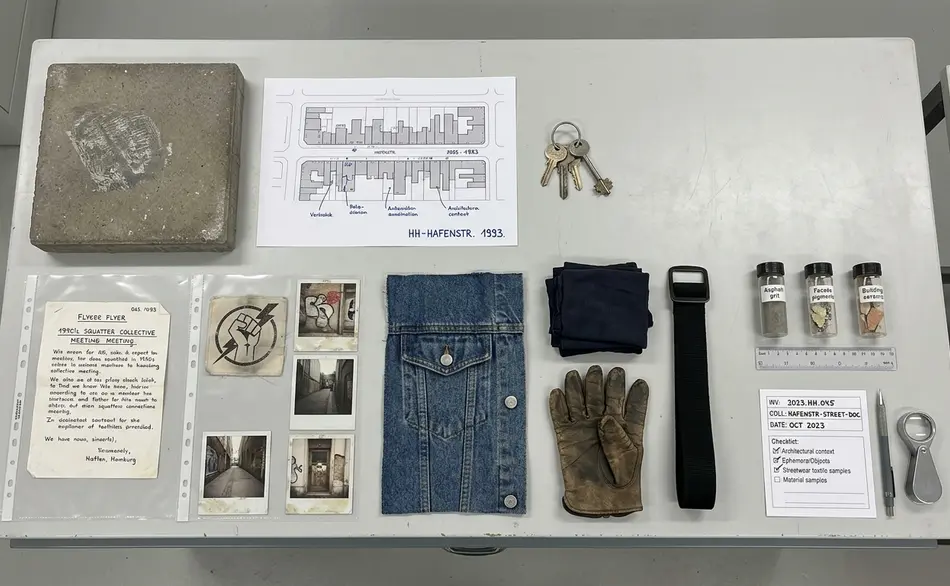
The Hafenstraße occupations began in 1981. Through the mid-to-late 1980s, the houses became a visible conflict point before negotiated tenancy arrangements stabilized parts of the occupation in 1987. Squatting was not lifestyle decoration here. It was a response to empty property, housing pressure, policing, and the sense that the city wanted the people without money to move along quietly.
This is where the club’s fan-base shift starts to make sense.
The Millerntor was too close to stay neutral
The Millerntor sits within walking distance of Reeperbahn nightlife, Hafenstraße squats, and left-wing bar culture. That mattered operationally. Matchday traffic overlapped with the district’s political street life rather than flowing into a sealed suburban fan zone.
Punks, squatters, students, bar workers, dockers, drinkers, and political organizers were not passing through a themed entertainment quarter. They were using the same streets, fighting over the same spaces, and drinking in the same rooms. The football ground became one more node in that map.
The resulting socio-economic vacuum helped spark the anarchistic takeover of Hafenstraße, and the occupation helped give local shape to the Black Block anarchist movement. The club did not recruit that scene. The scene arrived because the stadium was there, cheap enough, central enough, and porous enough.
Key Takeaway: Treating FC St. Pauli as a clever sports identity misses the order of events. The neighborhood changed first; the terraces followed.
Punk, Politics, and the Skull Flag
By the mid-1980s, the standing sections looked different. The older, more conventional local football crowd had not disappeared overnight, but punks, squatters, students, and left-wing drinkers were now visible enough to alter the temperature of the place.
A terrace learns its own language
The club’s cult status came from collision. Punk and hardcore music scenes merged with football terrace culture at a time when many European grounds were being pulled toward nationalist posturing, casual violence, and right-wing recruitment. St. Pauli’s fan culture moved the other way.
The skull-and-crossbones flag became legitimate because it passed through the terrace first. A generic reading treats the skull as a clever sports logo; the failure case is that it began as a terrace-pirate marker from fan culture before becoming official club property.
The flag is commonly linked to a fan known as Doc Mabuse. The earliest versions were hand-made rather than licensed goods, and one account traces the image back to an anatomical reference book. That origin matters because the mark did not arrive polished. It arrived rough, funny, confrontational, and slightly illegal-looking. Exactly right for the room.
Fanzines before platforms
Millerntor-Roar operated as more than match commentary. It documented fan politics, music taste, anti-racist positions, and the terrace’s self-image before social media flattened those functions into content streams.
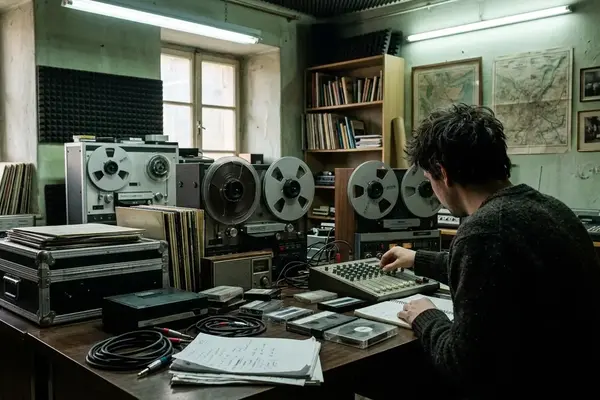
Music gave the scene volume. Cro-Mags, Turbonegro, and Asian Dub Foundation were not just names on someone’s jacket. They signaled a set of affiliations: hardcore discipline, queer-trash theatre, anti-racist bass pressure, refusal of respectability. On the right night, a St. Pauli scarf could sit beside a patched jacket and make more sense than a replica shirt ever could.
By the early 1990s, the club’s stadium rules and public identity had moved toward explicit opposition to fascist, racist, nationalist, and sexist activity. The slogan “St. Pauli Fans Gegen Rechts!” worked because it had enforcement behind it. Politics as press copy is cheap. Politics as terrace conduct is harder.
Warning: The skull is easy to copy and hard to carry. A pirate mark without the anti-fascist line becomes costume, not culture.
Hendrik Lüttmer on Merchandising Authenticity
Hendrik Lüttmer’s credibility comes from sequence. He entered as a late-1980s season-ticket holder before becoming Merchandiser and Creative Director at Upsolut, so the commercial language passed through someone who had seen the symbol work before it became a retail category.
From terrace object to protected mark
The skull-and-crossbones was brought under official club control in 1998. That move allowed FC St. Pauli to license, reproduce, and protect it as a central merchandising asset rather than leaving it as an uncontrolled fan graphic.
In a different club, this would read as standard brand consolidation. At St. Pauli, it was more unstable. The symbol already had street meaning. Politics already gave it weight. And it already belonged emotionally to people who did not think of themselves as consumers first.
The interview with Lüttmer sits inside that tension. He was not approaching the skull like a Mitchell & Ness throwback script or a Wool flannel heritage badge that could be revived on seasonal nostalgia. His reference point reached back to the late-1980s terrace, where the mark had worked as a pirate signifier before it worked as apparel.
That distinction is the whole game.
The catalogue kept the grit in frame
Photographer Benne Ochs helped define the St. Pauli Merchandising Catalogue through raw, local documentation: street corners, backstage energy, fan bodies, Hamburg grit. The look was not polished sportswear presentation. It felt closer to someone handing you a record sleeve outside a venue than a club shop asking for loyalty points.
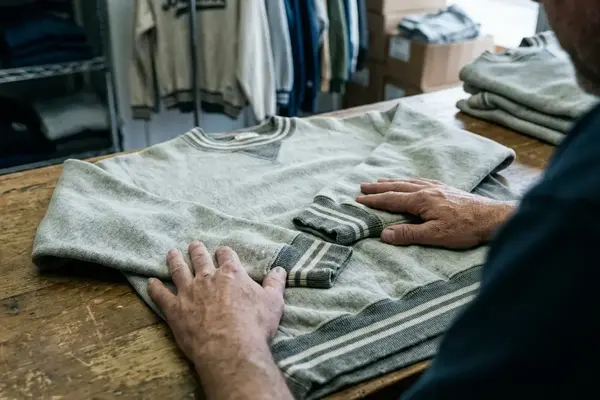
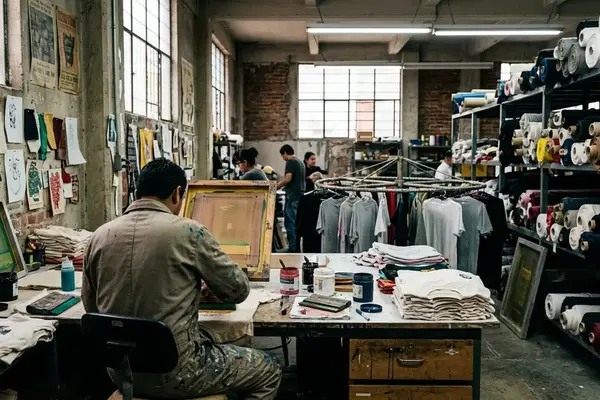
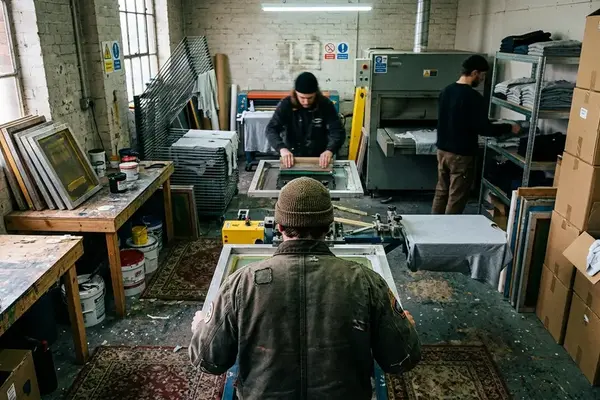
The commercial category widened fast enough to matter. This was not only replica kit. It crossed into hoodies, tees, jackets, patches, scarves, and everyday streetwear pieces that could be worn far from the Millerntor while keeping the skull as the visual anchor.
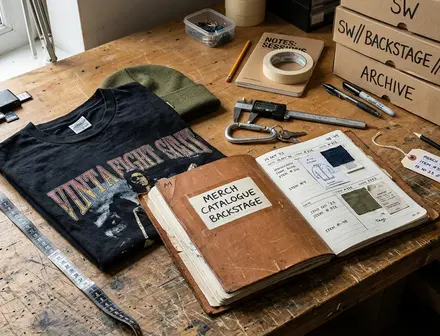
Supporting evidence confirms the central point: the 1998 acquisition turned a fan graphic into official club property, but the visual identity stayed credible because the treatment did not clean it beyond recognition. The clothes still needed to look like they could survive a bar floor, a train platform, a basement show, and a cold night on the terrace.
Pro Tip: Authentic merchandising does not mean refusing commerce. It means knowing which details cannot be sanded down without killing the signal.
Commercial Reality vs. Subcultural Roots
There is an easy moral pose here: commerce equals betrayal. It sounds clean, and it is usually lazy.
A generic football-business reading treats commercialization as betrayal; St. Pauli is more context-dependent because merchandise also helped protect a financially fragile club while giving supporters a globally legible symbol. The early-2000s financial rescue period showed how merchandise and supporter mobilization could become survival infrastructure, not just fashion revenue.
Two matchday economies
Modern St. Pauli now runs on overlapping economies. One is the older bar-and-terrace ecosystem around the Millerntor: local routes, supporter habits, left-wing rooms, old loyalties. The other is a newer visitor economy built around nightlife, tourism, and event-style consumption.
Those economies do not always hate each other, but they do not want the same thing. One wants continuity. One wants an experience. One carries memory. One buys the weekend.
Gentrification has changed the neighborhood substrate that produced the club’s identity. Higher rents, renovated nightlife spaces, and tourist-heavy streets make the old squat-and-punk geography harder to reproduce. The catch is local: the anti-fascist identity is strongest when active supporters, local institutions, and club governance keep enforcing it; a skull hoodie bought abroad can carry the look without carrying the politics.
Refusing the clean machine
FC St. Pauli resists becoming a sanitized commercial entity through repeated tests, not one heroic statement. The contrast with Bayern Munich is useful because it marks the danger: football as smooth global product, friction removed, politics softened into general goodwill.
St. Pauli’s line has been sharper. Rejecting Maxim magazine over sexist advertising was not a cosmetic gesture. It was a commercial decision shaped by stadium culture, fan pressure, and the club’s public stance against sexist activity. A sponsor can bring money and still be wrong for the room.
A generic anti-fascist-club reading treats politics as a press statement. At St. Pauli the politics were built through squats, fanzines, stadium rules, music scenes, and repeated supporter enforcement. That is why the club remains useful to study: not because it solved the contradiction between money and subculture, but because it keeps making the contradiction visible.
The skull survives when it points back to the street that made it. Once it points only to the shop, the whole thing starts to look too clean.