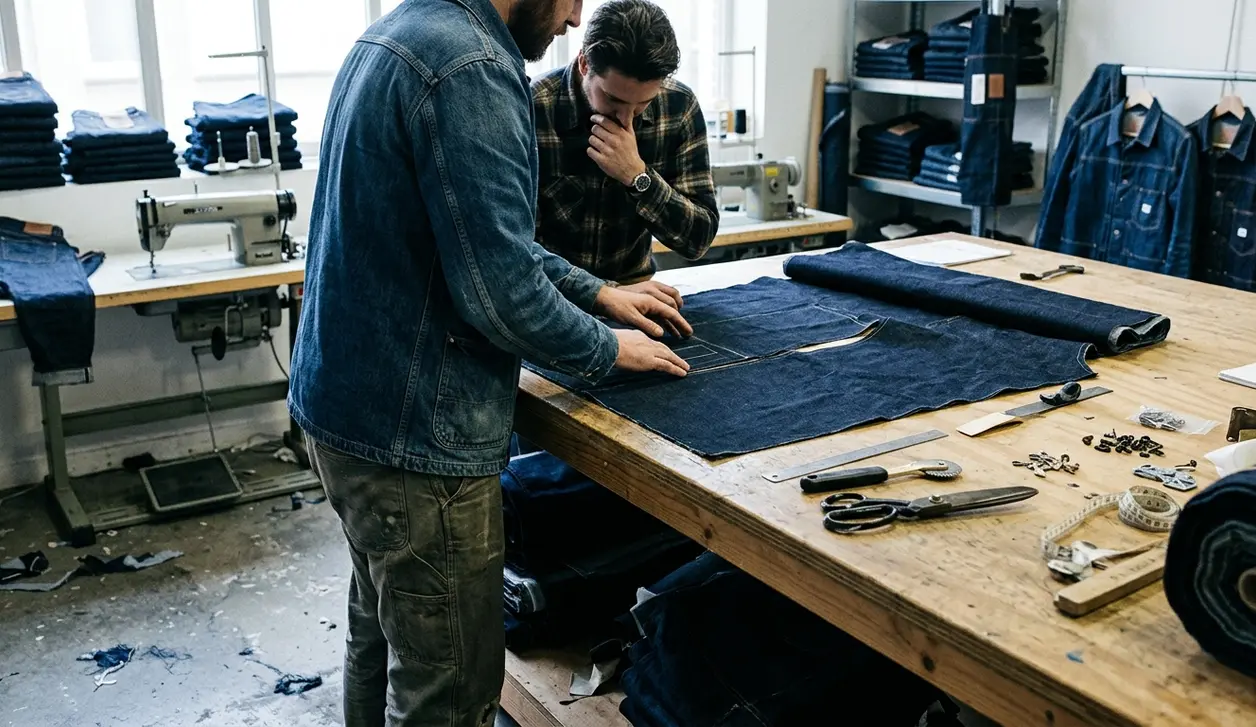

The Origins of a Subcultural Staple
I remember looking at the early landscape of European heritage brands. Most were playing dress-up. Rob Harmsen and Keith Hioco took a different route when they launched Eat Dust in Antwerp back in 2010. They had already spent years inside the corporate denim and fashion system. They knew how the machine worked. They also knew exactly what it lacked.
The market gap wasn't simply another premium denim label—it was motorcycle-informed menswear built with the weight, abrasion logic, and cultural roughness of garage and street clothing. Their early decisions came from shared cultural filters first, then product logic. Denim, motorcycles, punk, skate wear, and workwear were treated as lived references, not mood board clippings.
Rejecting the Fast Fashion Paradigm
A core jean or jacket designed for years of wear ties cash into repeatable fits and durable trims. Trend-led product, by contrast, can be cleared inside a single selling season. Their anti-fast-fashion stance was a production decision as much as an aesthetic one. The discarded route was trend-led capsule turnover: cheaper cloth, lighter construction, and seasonal novelty as the primary driver of sales.
Longevity requires reinforcement at stress points. You have to build up the pocket corners, fly construction, belt loops, yoke seams, and cuff edges rather than relying on surface graphics to carry the garment. The financial risk of prioritizing longevity over trends is steep. You are betting that the customer will value a garment that outlasts its initial hype cycle.
Key Takeaway: A subcultural menswear brand loses credibility when it scales by adding generic seasonal categories faster than it can maintain fit, fabric integrity, and repairable construction.Technical Deep Dive: Sourcing Heavyweight Denim
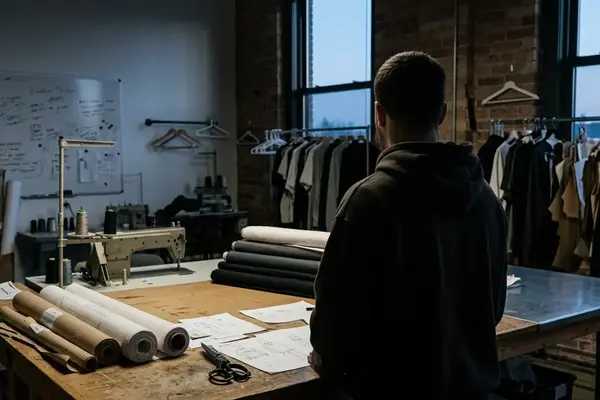
Fabric selection is a strict sequence. You handle the cloth, assess the indigo shade and loom character, and test how the fabric behaves after wash and wear. Only then do you decide whether the construction can actually handle the weight.
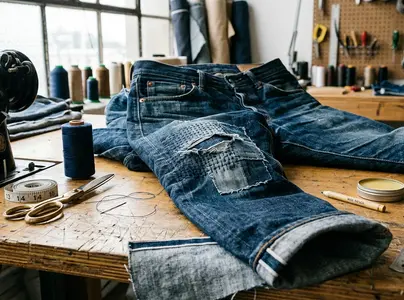
Heavyweight selvedge denim is commonly discussed from roughly 14 ounces per square yard upward. The useful test is how the cloth breaks in at the seat, knee, pocket mouth, and hem after repeated wear. Eat Dust leans heavily on Japanese selvedge to achieve this. There is one catch: a respected mill name does not prove garment quality by itself; the evidence has to show up in pattern balance, sewing consistency, shrinkage control, and how the jean ages on the body. A Japanese selvedge supplier gives the fabric story credibility only when paired with controlled cutting and hardware placement that survives wear.
Z-bar stitching acts as a reinforcement pattern at high-tension zones. Copper rivets add mechanical strength at pocket corners where pull and abrasion concentrate. Understanding the historical evolution of heavyweight denim reveals why these specific hardware choices remain non-negotiable for authentic workwear.
Translating Underground Culture into Garments
Walk through the terraces of FC St. Pauli on a matchday, and you see how subculture dictates uniform. Eat Dust applies this same translation to 1970s chopper culture and punk rock. The translation works because references are converted into silhouette, function, and attitude rather than copied as costume.
Warning: Failure case: treating biker or punk influence as graphics-only misses the real product constraints, such as seated riding posture, jacket length, pocket stress, seam abrasion, and hardware durability.The 1970s chopper reference is most concrete in garments that consider that seated posture. Short outerwear proportions keep the jacket from bunching. The Bloodline collection operates as a recurring design language rather than a one-off theme. Motifs, fit vocabulary, and hardware choices carry continuity across drops. You might see a heavy wool flannel shirt that feels as tough as a vintage Mitchell & Ness jersey, but cut specifically for the street.
Contemporary menswear balance comes from keeping the garment wearable off the bike or outside the club context. Cleaner proportions. Controlled branding. Fabrics that age without looking theatrical.
Sustaining an Independent Menswear Brand
The independent-brand strategy depends on protecting the core while letting the edges move. Stable denim fits, repeat cut-and-sew shapes, and direct customer feedback create continuity. Seasonal pieces can then take the risks.
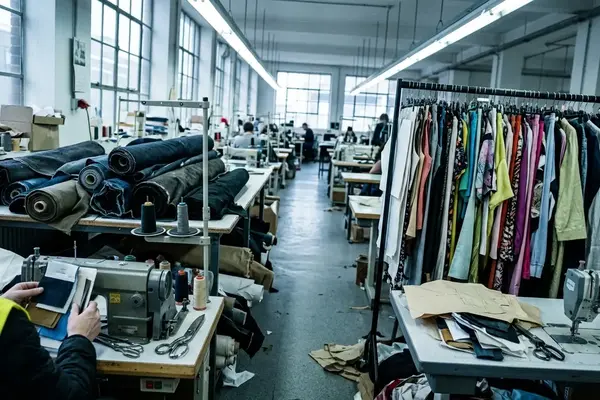
Scaling an independent cut-and-sew operation usually means tighter control over small-batch production, fabric commitments, quality checks, and repeatable patterns before expanding category count. Direct-to-consumer selling gives faster feedback on sizing complaints, fabric break-in, returns, repairs, and which core fits deserve reorders.
What growth really tests is inventory discipline. Too many experimental styles can dilute the core denim and outerwear identity that made the brand credible. Context-dependent variation plays a role here: a 14-plus-ounce denim can read authentic to raw-denim customers but feel punishing in hot climates or to buyers who do not want a long break-in period. How do you evolve a heavy-duty heritage without alienating the riders who built your foundation?