
The Roots of the Americana Obsession
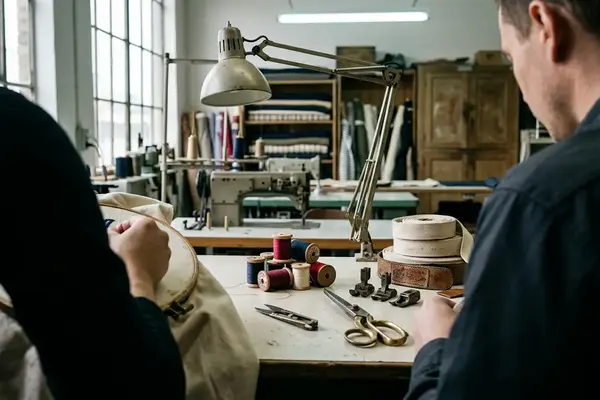
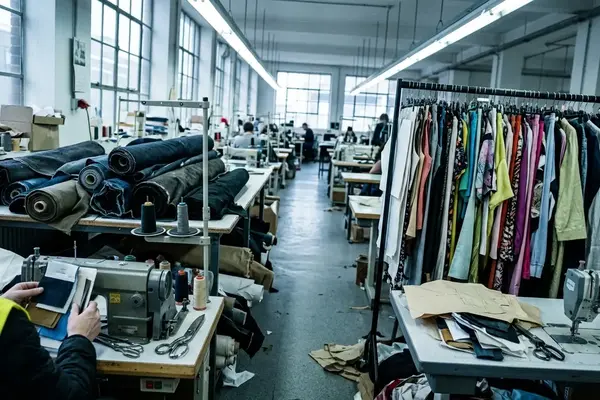
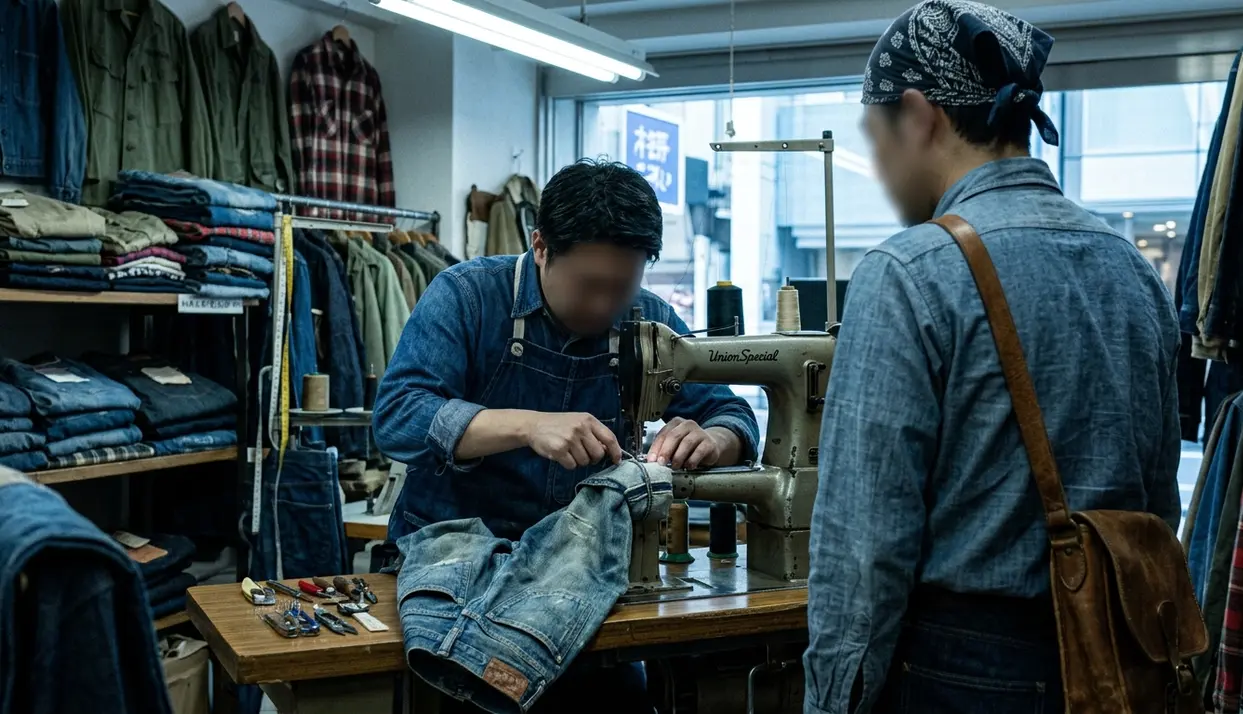
I remember standing in a cramped workshop in East London, watching a machinist fight with a heavy-gauge needle through 14oz denim. That struggle is the heartbeat of Americana. Before it became a global aesthetic, it was a manufacturing obsession. We cared about denim weight, loom behavior, pocketing, rivets, and shrinkage. A chore coat or a five-pocket jean earns its character through friction.
Look at the early work of brands like Tellason. Their foundation relied heavily on Cone Mills White Oak denim. Established in 1905, that plant became the absolute reference point for selvedge. Its shuttle-loom production gave the fabric a distinct hand, an irregular slub profile, and a clean edge finish that high-speed commodity denim simply cannot replicate.
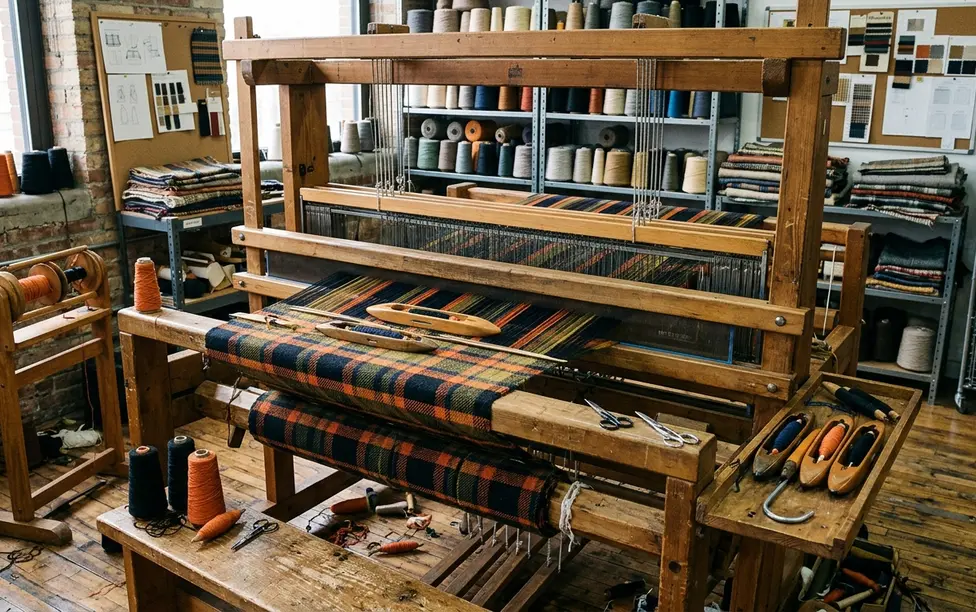
White Oak closed its doors in 2017. That closure made deadstock and pre-2017 yardage materially different from the generic heritage-style denim marketed today.
Brands like Eat Dust built their entire DNA on raw indigo and traditional cut-and-sew techniques. Testing showed that these raw indigo programs require a break-in period measured across months of wear, not a single wash cycle. The fades emerge organically from abrasion at stress points. You see it in the lap, the wallet pocket, the knee, the cuff, and the seat.
The Harajuku Interpretation
Harajuku was never a copy machine. It operated as a forensic workshop.
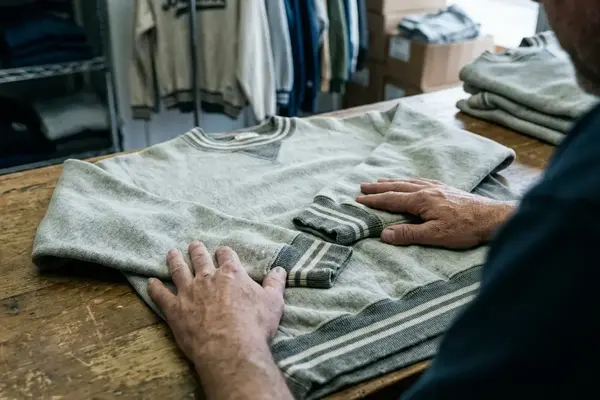
Japanese designers studied American garments like archival specimens, analyzing seam placement, fleece pile, and rib tension. Look at a piece from Nigo's Human Made. You will find vintage-sportswear vocabulary executed with terrifying precision. They utilize specific pile fleece and internal-style product identifiers like HM8-C-001 PW SWEAT. That kind of coding appeals directly to collectors who read garments like catalog entries.

Bedwin & The Heartbreakers took a similar forensic approach to varsity influences. Their integration relies on highly specific build cues. You see snap-front closures, contrast sleeves, chain-stitch-style lettering, striped ribbing, chenille-style patches, and cropped athletic proportions.
The darker branch of this scene pulled from different source material. They looked at punk flyers, toy culture, stencil graphics, anti-authoritarian slogans, and skull motifs rather than Ivy League nostalgia.
Craftsmanship and Traditional Techniques
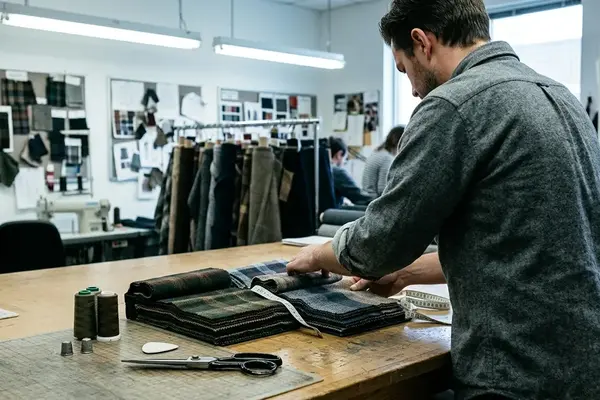
The best heritage-influenced streetwear is decided at the machine and material level. It comes down to choices like whether to use dense cotton tape instead of a synthetic binding.
Hiro Endo's Dec0eight illustrates this perfectly by utilizing Sanadahimo. This narrow woven cord is historically associated with Japanese martial and ceremonial uses, including securing samurai sword fittings. In modern apparel, it functions as a tactile bridge between utility trim and cultural reference.
The Long Shot Experiment applies a similar rigor to handmade headwear using heavy moleskin and corduroy. This requires significantly slower handling than lightweight twill. The pile can crush, seams easily become bulky, and the directional nap must be perfectly aligned before cutting.
Vintage knitting machinery remains crucial here. It produces the texture, tension, and dimensional irregularity that computerized mass production tends to smooth out. The trade-off is lower output and constant hands-on correction—a reality that separates true craft from mass production.
Pro Tip: Failure case: calling every selvedge jean 'Japanese Americana' collapses the distinction between commodity retro styling and garments built around specific loom behavior, dye character, pattern research, and finishing restraint.Cross-Cultural Collaborations
The most interesting developments happen in the feedback loop. Japanese designers absorbed American military, workwear, surf, skate, and collegiate codes. Western designers then adopted Japanese precision.
Kazuki Kuraishi brought a tailored approach to street fashion through The Fourness and his ongoing partnership since 2010 with 6876 x Cash Ca. This tailored streetwear approach shows up through narrower shoulder lines, cropped jacket lengths, cleaner trouser breaks, and fabric choices that make casual garments behave closer to suiting.
We saw the intersection of high fashion and streetwear peak when Kanye West and Jean Touitou collaborated on A.P.C. They aimed for a couture-level finish. In a streetwear collaboration, that means cleaner interior construction, more deliberate fabric selection, stricter fit control, and fewer throwaway trims than standard merchandise-driven releases.
Sampling in this context is not random borrowing. It means lifting a military pocket shape, a French work jacket block, a collegiate graphic format, or a skate-shop visual cue and recomposing it inside a new garment system. Context-dependent variation dictates that the same varsity jacket reference can read as collegiate nostalgia, Harajuku reconstruction, punk parody, or luxury streetwear depending on fabric weight, patch language, fit, and how aggressively the branding is handled.
Beyond Replication: The Limits of Heritage
Heritage alone cannot solve contemporary menswear. A perfect reproduction deck jacket can still fail in a modern downpour. We have to move beyond pure reverence.
The necessary evolution points toward technical outerwear, blending heritage silhouettes with modern fabrics. Diaplex-style technical membranes are now used to add weather response, breathability, or temperature adaptability to garments that still look like classic field jackets or parkas.
Patagonia pushed this boundary with the introduction of Merino Air technology in the mid-2010s. This high-loft wool insulation concept uses advanced computerized knitting and air-jet processing to reduce cut-and-sew waste compared with conventional panel assembly.
Our findings suggest that modern sustainability claims in this lane increasingly depend on fiber origin, dye chemistry, repairability, and agricultural practice rather than only on whether the garment looks durable.
Pure heritage replication loses relevance when the wearer needs waterproofing, thermal regulation, low-bulk layering, or traceable material sourcing more than museum-grade accuracy.
Key Takeaway: The future of this aesthetic lies in hiding advanced material science inside historically accurate silhouettes.