
The Cost of Editorial Complicity
If you fail to control the interview narrative, you forfeit your publication's credibility and become an unpaid billboard for a brand's marketing department.
Access to high-profile streetwear and menswear designers is a currency. Trading hard questions for that access bankrupts your relationship with the reader. Before accepting the slot, identify the interview conditions. A remote call, a showroom walk-through, a studio visit, or a backstage holding area each changes how much control the publication has over pacing and follow-ups.
For access-driven profiles tied to a recent collection, review the lookbook, runway notes, product descriptions, and any prior interviews from roughly the past year and a half. Repeated phrasing becomes easy to spot.
The core objective remains extracting tangible insights about subcultural influence, garment construction, and design philosophy without letting the subject retreat into rehearsed talking points.
Deconstructing Brand Mythology
Read the press materials like a pattern cutter reads a garment: locate the seams, stress points, and decorative cover-ups. Analyze the anatomy of a standard fashion press release to identify the fluff. Flag repeated terms such as "redefining," "disrupting," "timeless," "uniform," "community," and "elevated essentials." Prepare one follow-up for each term that asks what actually changed in the physical garment itself.
Map the gaps in the brand's official narrative. If the press copy focuses heavily on a vague inspiration, the interview must pivot to the technical reality of sourcing and pattern-making.
When a label claims subcultural influence, pull at least three reference points before the interview. You need one garment detail, one music or scene reference, and one distribution or styling cue from the period being invoked.
Archival documentation of Mitchell & Ness spanning their early 2000s catalog expansion indicates as much. The transition from niche athletic supplier to streetwear staple required a distinct narrative shift that interviewers had to navigate by focusing on the physical garments rather than the marketing copy.
Examine historical case studies of underground labels that transitioned to mainstream luxury. Their public narratives shifted. An interviewer must dig to find the original ethos.
Question Architecture and Scope
Avoid chronological traps like asking how a designer started. Anchor questions in specific, recent collections or physical garments to force concrete answers.
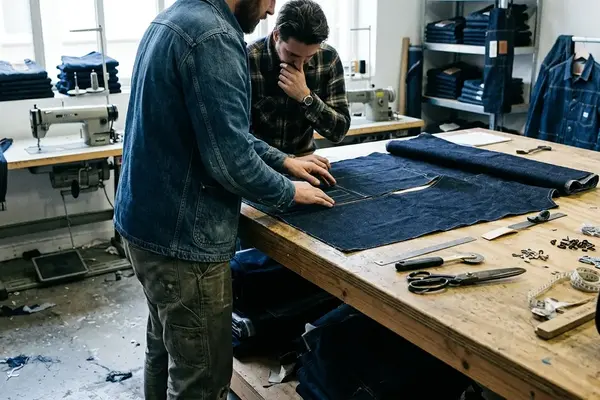
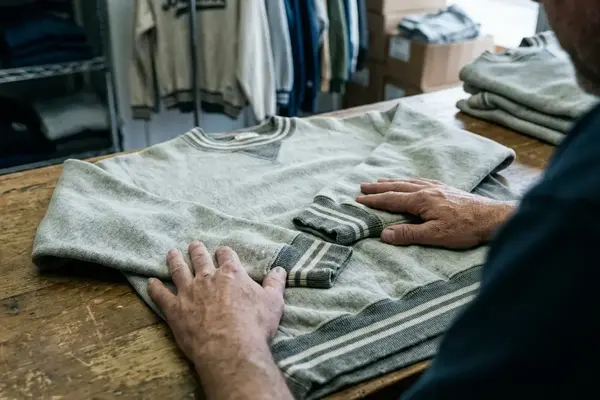
Start with a garment the designer can physically identify. Ask about the washed canvas jacket from the most recent drop, the cropped wool flannel trouser from the winter capsule, or the belt hardware used across the last two releases.
Pro Tip: Build a modular question structure that moves from hyper-specific technical details to broader cultural impacts. Prepare roughly a dozen to sixteen core questions for a 30-minute slot. Mark only five as non-negotiable so the conversation can breathe without losing editorial purpose.
Supply-chain questions need to match the subject's actual authority; an independent founder may know the dye house, while a creative director inside a larger luxury structure may only control silhouette, reference, and final approval. Tailor the scope of supply-chain questions accordingly.
Navigating the Room and the Pivot

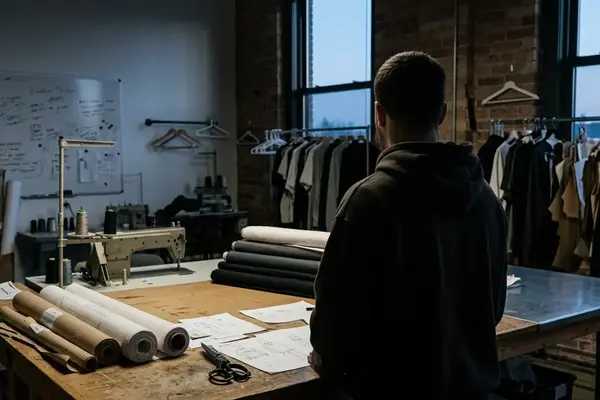
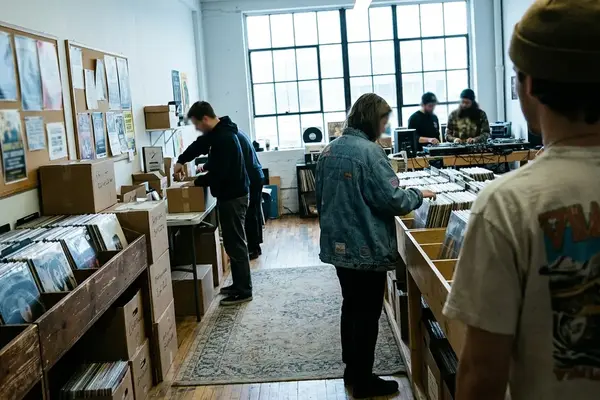
Treat the room as part of the interview record. Establish the physical and psychological environment of the interview. Whether in a chaotic Paris showroom or a quiet studio, control the pacing.
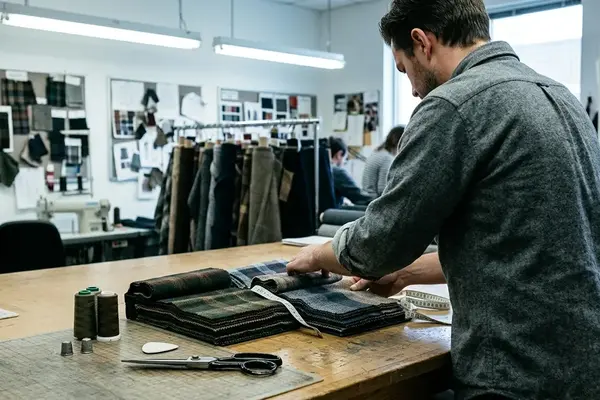
Arrive about 15 to 25 minutes before an in-person studio or showroom interview. Observe racks, sample tags, fit notes, fabric swatches, and the way staff handle the garments before the formal conversation begins. A basement-level independent label may reveal process through invoices and deadstock bins. A polished luxury appointment may require reading silence and evasive phrasing. Consider the terraces of FC St. Pauli; the authentic subcultural uniform is built on specific, unglamorous details, not PR spin.
Master the art of the gentle pivot. When a designer defaults to a rehearsed marketing script, use active listening to interrupt politely and redirect to a granular detail.
Warning: Address the presence of PR representatives in the room. Maintain eye contact with the designer and use highly technical language to bypass the handler's interference. If a PR representative interrupts, return to the last concrete noun the designer used—zipper, wash, last, block, lining, or sleeve pitch, rather than arguing about access or approval.
Editing for Cultural Substance
Apply strict editorial standards during the transcription and editing phase. Edit as an archivist, not as a brand copywriter. Preserve the hesitation before a revealing answer. Do not smooth over every rough edge or contradiction. These often reveal the most about a designer's true process.
Transcribe or review the recording within a day or two while room details, garment handling, interruptions, and off-mic clarifications are still fresh.
Cut the sycophantic filler. Keep a separate edit log for cut material. Remove corporate filler, repeated slogans, overlong interviewer setups, unverified claims, and legally sensitive assertions that require framing. Maintain a dense, high-impact read.
Contextualize the trust elements. Ensure that any claims made by the designer regarding sustainability or cultural origins are framed within the specific temporal context of the interview.
Key Takeaway: Consider a common failure case. A designer repeatedly says the collection is about "community," but cannot name the scene, venue type, garment habit, sound, or styling code that shaped the work. The interviewer should not let that answer stand as cultural substance.
The Final Cut
The transition from a passive recorder of quotes to an active cultural archivist happens in the final review. Before publication, compare the final Q& A against the original interview objective. Subcultural influence, garment construction, and design philosophy should each appear through specific answers rather than atmosphere alone.
For interviews connected to a collection released within roughly the past year, add temporal framing to major claims. This ensures the piece does not turn a momentary production choice into a permanent brand truth.
When you sit down across from a designer whose work you admire, will you demand the truth of their process, or will you settle for the comfort of their pitch?