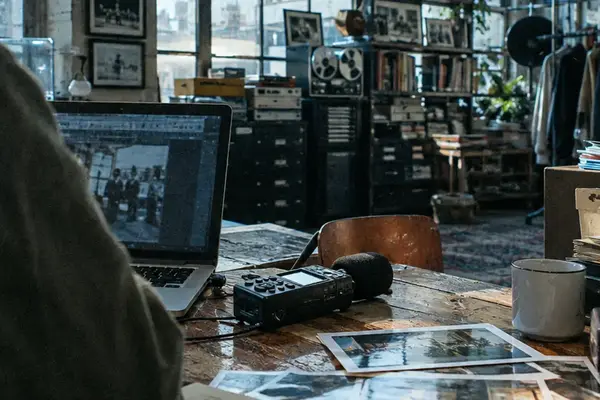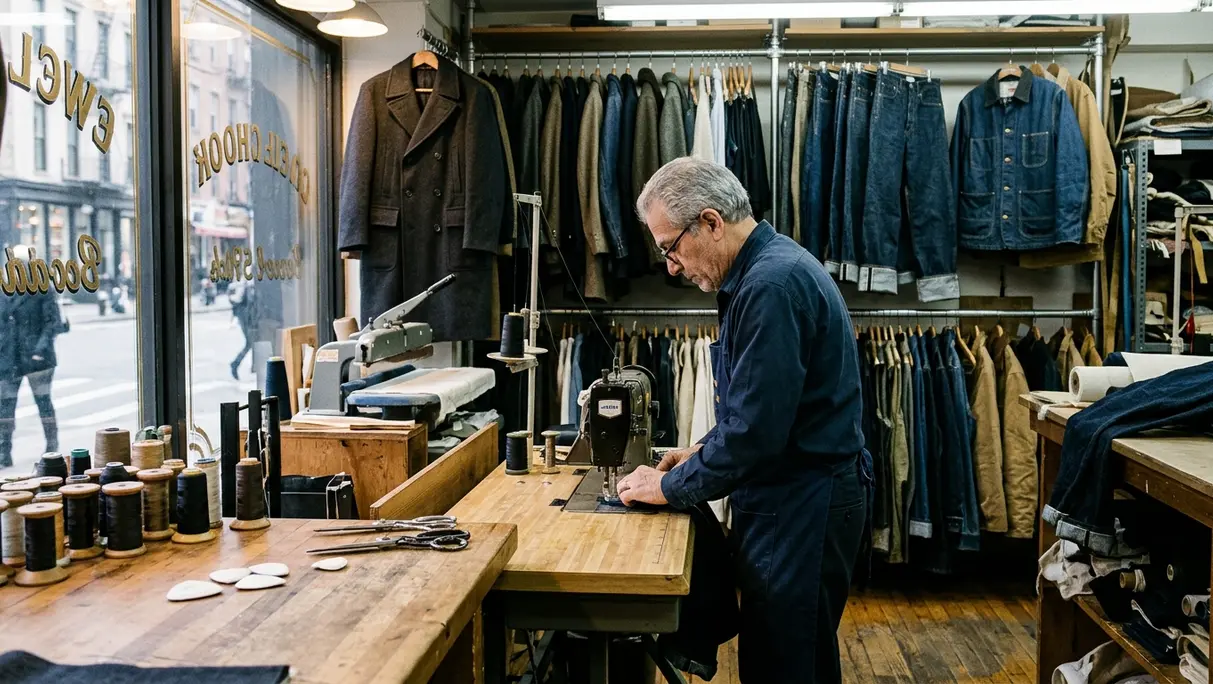

Why do New York's most celebrated menswear outfits only start looking right after a trip to a basement shop on a side street?
The Size Label Leaves the Proportions Unfinished
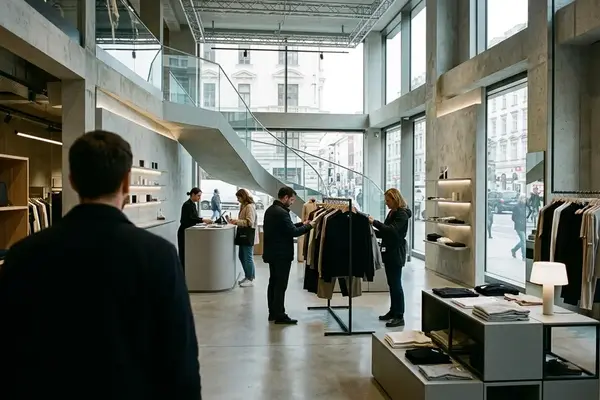
Follow a pair of pleated trousers from a SoHo rail into the fitting room. The waistband closes. The label matches the usual size. Yet the pleats pull open, the knee sits awkwardly, or the hem collapses over the shoe. The garment needs a closer reading than the mirror glance that usually seals a purchase.
Pattern grading changes a base pattern across sizes. It cannot independently accommodate every combination of torso length, seat shape, thigh circumference, and posture. The selection in a Lower East Side boutique or Tribeca showroom still meets the same problem: a production size has to settle on an individual body.
Contemporary silhouettes make that negotiation visible. A cropped, boxy jacket takes part of its apparent length from the trouser rise beneath it. Wide pleated trousers need room through the leg, but their pleats should hang closed at rest and their side seams should fall cleanly. Heavy vintage workwear brings reinforcement panels and established creases into the equation.
Assess shoulder placement, rise, knee position, and hem before asking for anything narrower. The useful question is which proportion needs correcting while the garment keeps its intended shape.
What the Workbench Must Preserve
The inspection starts inside out. A tailor identifies the seam construction, finds reinforcement and existing needle holes, and follows the grain through the proposed change. That sequence separates a straightforward hem from an alteration that crosses a double-knee panel, a felled seam, or a sleeve vent.
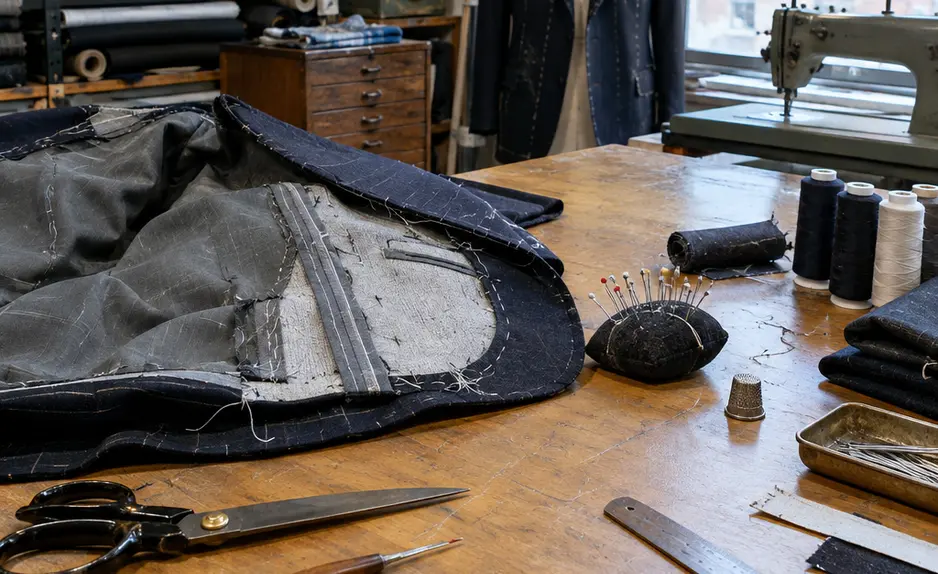
Denim makes the distinctions clear. Reattaching an original hem preserves its worn edge and adds a joining seam above it. Sewing a fresh chain-stitched hem rebuilds the stitch structure; the abrasion develops through wear. These are different jobs. Agree on which one belongs on the ticket.
Double-knee trousers demand another kind of attention. Before tapering, mark the knee and compare the proposed seam with the reinforcement panel, pocket edges, and available allowances. Uneven changes between inseam and outseam can pull the leg's visual balance sideways. A narrower measurement means little if the panels now look twisted.
Match the Machine to the Seam
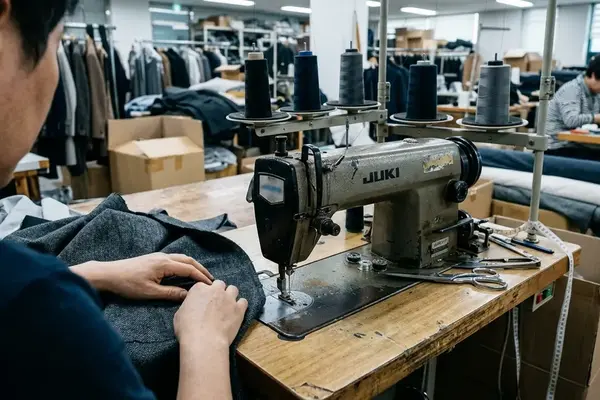
A suitable chain-stitch machine makes a chain-stitched hem. A heavyweight walking-foot machine helps feed bulky layers consistently. A blind-stitcher catches small amounts of face cloth for an inconspicuous hem, useful when wool flannel trousers need a clean finish. Steam, a pressing surface, and controlled pressure help shape suitable wool constructions; structured canvas responds less readily to that shaping.
Working jacket cuffs present the sharpest decision. Preserving their buttonholes shifts the shortening work to the sleeve crown, requiring sleeve removal, cap adjustment, and resetting with the pitch and sleeve-head support accounted for. Ask the tailor to assess cap geometry, available cloth, and the required shortening before approving this route. Boutique prestige has no bearing on that construction problem.
Protect the Balloon Leg Before Pinning the Hem
“Make it fit better” leaves too much room for interpretation. A conventional tailoring brief can invite a cleaner, narrower result: less volume, a tidier break, a closer body. Those choices become destructive when the volume carries the garment's identity.
Start by naming the protected features. Keep the dropped shoulder. Keep the square body of the chore coat. Keep the ballooned thigh. Then pin the proposed adjustment and inspect the front, side, and back. This puts the disagreement where it belongs: in the brief, rather than assumptions about the tailor's age or background.
A balloon trouser draws its outline from thigh volume, knee position, and hem opening. Tightening only the lower leg can turn that curve into an ordinary taper. Likewise, taking width out of a boxy coat changes how its hem hangs away from the body. The resulting garment may look tidy while losing the proportion that justified buying it.
Be precise about “an inch.” An inch of circumference, an inch across the garment laid flat, and an inch at each seam describe substantially different cuts.
At the shoe, distinguish break from stacking. Break is the fold formed when the front hem meets the shoe; stacking adds folds above that contact. Compare a full break over chunky footwear with a clean crop exposing a derby's welt. Pin candidate lengths a quarter-inch apart and look again—that comparison makes the decision visible. Which length carries the intended silhouette?
Read the Finished Rack, Then Write the Brief
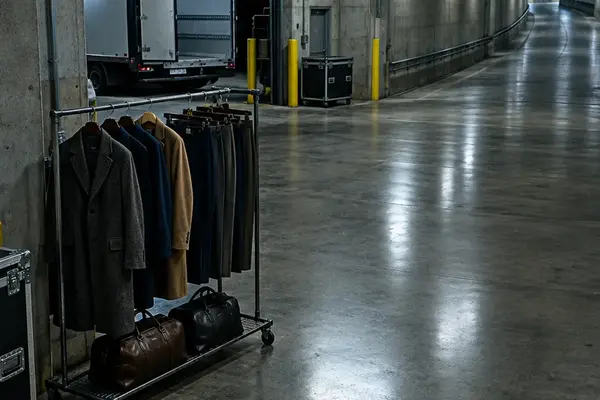
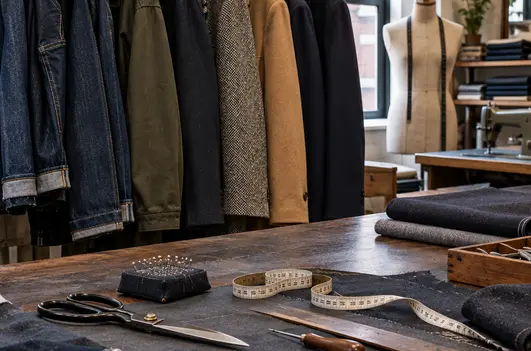
A neighborhood shop's finished rack offers a practical starting point. Selvedge denim, substantial outerwear, and structured overcoats give the conversation something relevant to work from. A rail of pressed dress shirts tells less about a double-knee taper. Follow the visual check with a question about the actual seam in hand.
- Start with a familiar garment. Give the shop a lower-stakes first commission before handing over an archival piece. Its known fit makes the finished change easier to judge.
- Bring the outfit's working parts. Wear the exact shoes for a trouser fitting. For a coat, bring the intended underlayers as well, so body ease and sleeve length are judged over the right bulk.
- Pin both legs independently. Posture and hip position can make identical measurements hang differently. Inspect both sides rather than automatically transferring a measurement.
- Mark the protected dimensions. “Keep the knee width unchanged” gives a clearer instruction once the knee line is physically marked. Agree where any taper begins.
- Inspect the replacement seam. Ask how its stitch length, thread thickness, color, and topstitching will relate to the existing construction. Settle whether a denim job preserves the worn hem or creates a new chain-stitched one.
- See the allowance before cutting. Ask how much cloth will remain inside and whether the surplus will be retained, trimmed, or enclosed in the rebuilt seam.
Keep a short alteration record: garment, agreed change, finished measurement, and behavior after wear. That gives the next fitting a concrete reference beyond “like last time.”
Give the Workroom a Place in the Purchase Budget
Seasonal drops put the purchase at the center of menswear culture. The workrooms of Chinatown, the Garment District, and outer-borough avenues keep those purchases in circulation between releases. Their contribution appears in a sleeve that hangs correctly, a preserved denim edge, or trousers that finally meet the shoe at the intended point.
A lasting relationship with a tailor improves the buying decision itself. Inspect construction before checkout. Identify the likely work and separate its cost from the garment price. A fitting record then connects each purchase to an increasingly precise understanding of proportion.
Build a permanent alteration line into every garment purchase; if the budget cannot cover having a piece tailored immediately after buying it, leave it on the boutique rack.