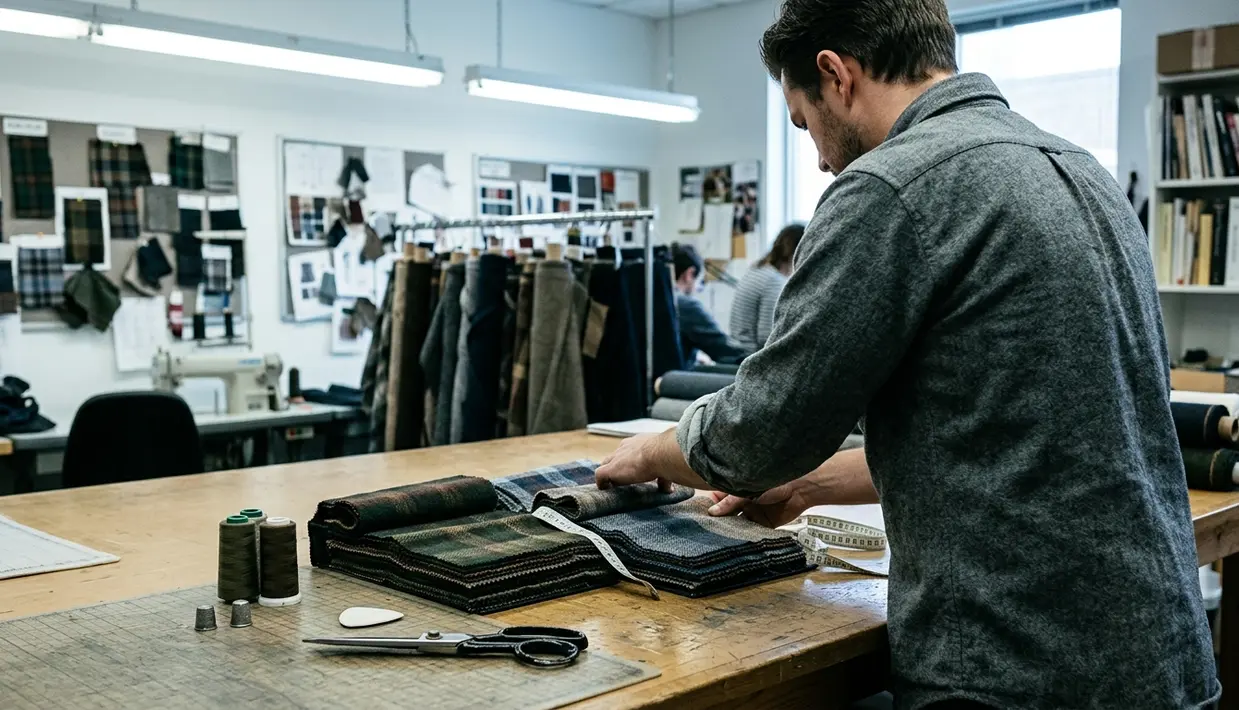

Shedding the Heritage Baggage
Wool flannel once split into two camps that refused to share the same closet. One side carried mid-century grey suiting and boardroom sobriety. The other dragged 1990s grunge and thrift-store workwear into the frame.
That split kept the cloth out of rooms where designers chased new silhouettes. Avant-garde and streetwear circles treated it as period costume rather than workable material.
Between 2020 and 2025 the fabric slipped those old associations. Relaxed tailoring and texture-led pieces pulled it forward as a structural choice instead of a nostalgic one. The plain or muted version now carries tailoring weight; the cotton plaid version still reads as casual shorthand.
Streetwear's Textural Shift
Underground crews and contemporary brands moved wool flannel into streetwear through the overshirt first. From there it reached wide-leg trousers and unstructured jackets. The sequence matters because each step tested how much body the cloth could hold without collapsing into costume.
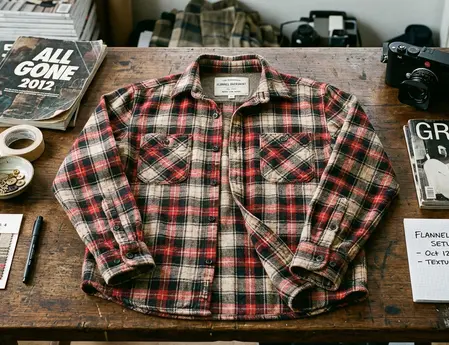
Heavy overshirts work when cut with dropped shoulders and a boxy body long enough to cover the belt line. Wide-leg trousers need a clean break so the nap stays intentional rather than crushed. Unstructured jackets gain from cloth that holds lapel and pocket shape without heavy canvas.
The shift away from graphic-heavy looks found its vehicle in this fabric. Texture replaced print as the signal of maturity.
The Argument Against Technical Synthetics
Techwear voices still call wool flannel too heavy and high-maintenance. They point to drying speed and water resistance as decisive advantages for synthetics.
Pure wool avoids petroleum microplastics during wash and wear. It refreshes through airing and brushing more often than laundering, which protects the nap. Spot cleaning after use, brushing for lint, and occasional dry cleaning form the practical rhythm.
The tactile depth and natural aging stay out of reach for nylon or polyester. natural thermoregulation and breathability give wool an edge that synthetics imitate but rarely match in daily wear. In sustained rain or heavy abrasion a synthetic shell still wins on speed, yet that remains a narrow slice of use.
Mastering Drape and Silhouette
From the cutter’s view flannel is directional and dense. The brushed nap and tight weave let a garment follow gravity without folding into sharp creases. Light absorption from the matte surface adds depth to single-color outfits.
Twelve-ounce cloth suits trousers and softer tailoring where movement counts. Eighteen-ounce pushes into outerwear and gives overshirts architectural presence. Nap direction must stay consistent across panels or side light reveals mismatches.
Dense flannel softens patch pockets and wide hems so they read quieter than the same details cut in gabardine or technical nylon.
Integrating Flannel into the Modern Wardrobe
Modern use starts with proportion. A heavy overshirt should fit over a hoodie or mid-gauge knit without strain across the chest. Boxy, relaxed cuts keep the fabric from reading as heritage cosplay.
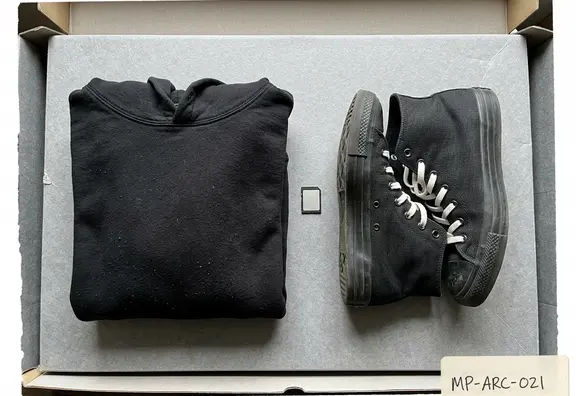
Pair the cloth with nylon cargos, washed black denim, or lugged contemporary footwear. Charcoal or black versions add visual weight to monochrome layers because the matte surface breaks flatness. The same eighteen-ounce cloth that sculpts an overshirt can feel stiff in pleated trousers, so weight selection follows the garment’s job.